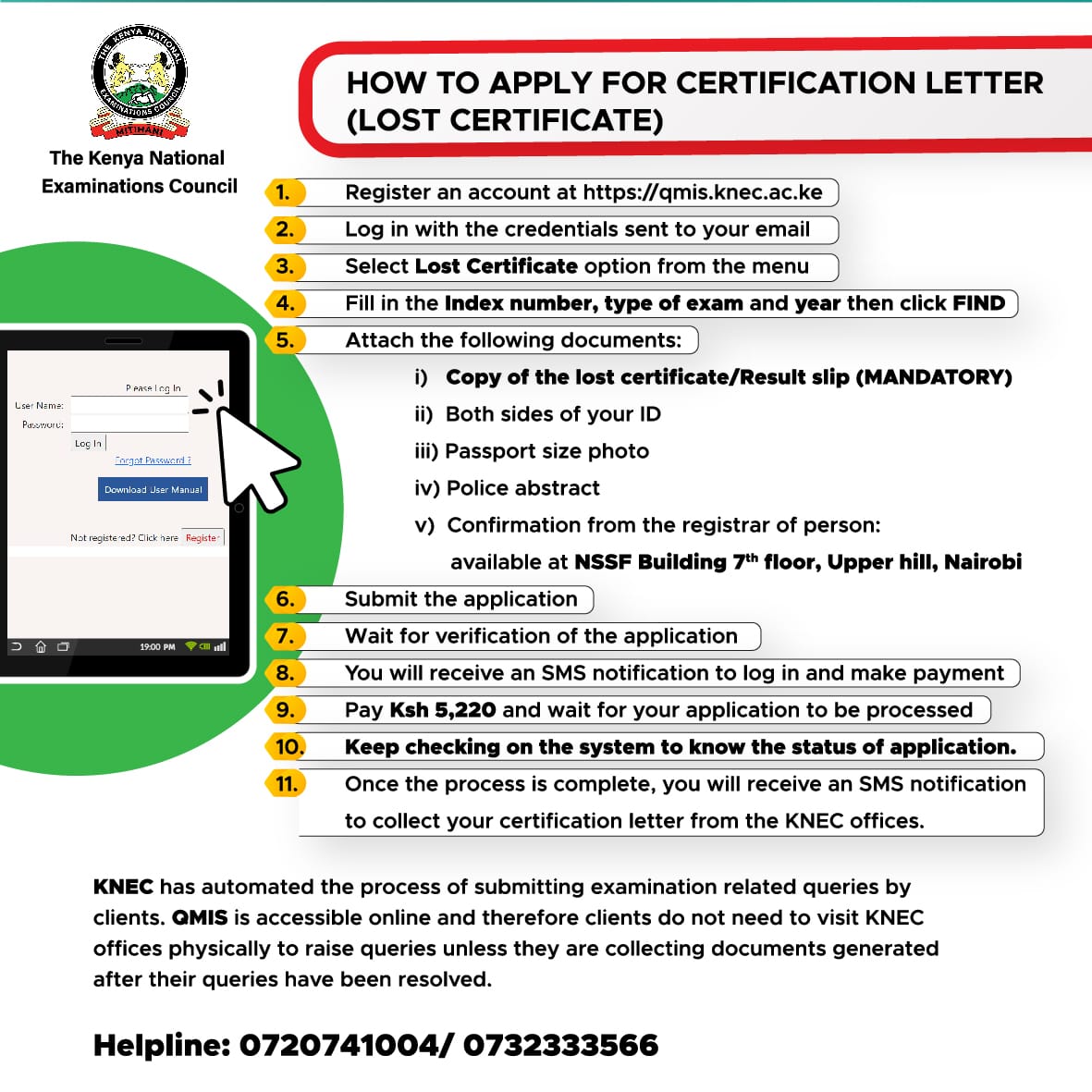
In an increasingly digitized world, the loss of important documents, such as academic certificates, is a distressing reality many face. Recognizing this, the Kenya National Examinations Council (KNEC) has provided clear guidelines on how individuals can replace their lost academic papers. These guidelines are designed to assist those in need of replacing crucial documents, ensuring the process is as smooth and efficient as possible.
The first step for anyone who has lost their certificates is to apply for a letter of certification. This letter serves as a formal attestation from KNEC that the individual did indeed achieve the qualifications they claim. To initiate this process, KNEC requires applicants to submit a copy of either their original certificate or their result slip. This prerequisite helps to verify the authenticity of the request and ensures that the council can accurately replicate the necessary information.
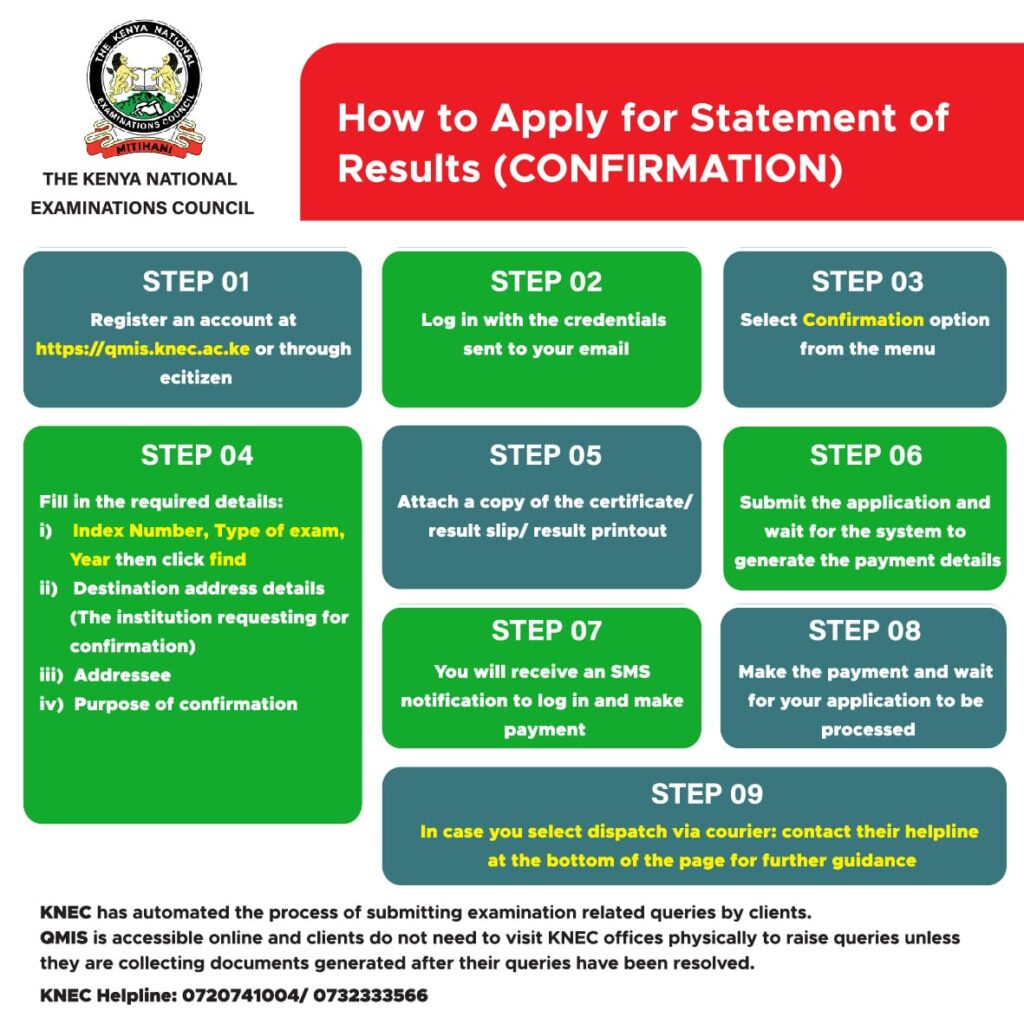
However, KNEC acknowledges that some individuals might find themselves in a predicament where neither the original certificate nor the result slip is available. For such cases, KNEC offers an alternative solution: the statement of results, also referred to as a confirmation. This statement acts as an official confirmation of an individual’s exam results and is tailored for situations where direct verification is needed by an institution. For instance, if a university or potential employer requires proof of academic credentials, the statement of results can be sent directly to them by KNEC, thus maintaining the integrity and security of the verification process.
Applying for a statement of results is done on a need basis. This means that KNEC will assess each application individually, ensuring that the necessity for such a document is justified. This personalized approach helps maintain the council’s high standards of data protection and minimizes the risk of fraudulent claims.
For those needing to replace their academic papers, the application process involves several steps. Firstly, individuals must fill out an application form available on the KNEC website or at their offices. Alongside the form, applicants are typically required to provide a police abstract report, which serves as an official record of the lost documents, and a sworn affidavit. These additional documents help substantiate the legitimacy of the request.
Furthermore, KNEC emphasizes the importance of providing accurate and up-to-date contact information during the application process. This ensures that any follow-up communication or delivery of the certification letter or statement of results can be conducted efficiently. Processing times can vary, so it is advisable for applicants to submit their requests well in advance of any deadlines they may have with institutions requiring these documents.
In conclusion, losing academic certificates can be a significant setback, but KNEC’s comprehensive guidelines offer a practical and reliable solution. By providing options for both letters of certification and statements of results, KNEC ensures that individuals can still verify their academic achievements and move forward with their personal and professional endeavors. This initiative not only underscores KNEC’s commitment to supporting education but also highlights their role in safeguarding the integrity of academic qualifications in Kenya.