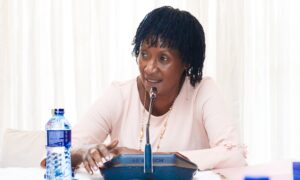
Kenya is mourning the loss of esteemed journalist, writer, and editor Rasna Warah, who passed away following an illness, as confirmed by her family.
The 63-year-old breathed her last on Saturday evening, January 11 according to standard media online publication. Her close friend, fellow human rights activist Alamin Kimathi, confirmed the sad news via X.
Warah was renowned for her fearless commentary on societal issues, governance, and human rights, making significant contributions to journalism and literature in Kenya and beyond.
Early Life and Education
Born in Nairobi in 1962 at the Aga Khan Hospital, Rasna Warah spent her early years in the Kenyan capital. She reminisced about the Nairobi of her childhood as a time of close family ties and carefree lifestyles, where children could walk to school and play freely without fear. She fondly remembered activities like attending movies at the Belle Vue Drive-In cinema and window shopping in the Central Business District on Sundays, describing those as simpler times when simple pleasures brought much joy.
For her high school education, Warah attended a boarding school in Naini Tal, a picturesque hill station in northern India surrounded by the Himalayas. She later pursued higher education in Boston, United States, where she lived for five years, and also spent a year in London during her 30s. These diverse experiences in different cities enriched her worldview, though she always considered Nairobi her true home. Lost in Nairobi
Career and Contributions
Warah’s career was marked by a deep commitment to addressing urban and social issues. She worked as an editor and writer at the United Nations Human Settlements Programme (UN-Habitat) for over a decade, focusing on urban development and the challenges facing rapidly growing cities. Her work at UN-Habitat included editing and co-authoring the “State of the World’s Cities” report series, which provided critical insights into urbanization trends globally.
As a columnist for Kenya’s “Daily Nation” newspaper, Warah penned thought-provoking articles on social, economic, and political issues impacting Kenya and the wider world. Her fearless commentary often challenged the status quo, shedding light on critical issues and advocating for human rights and good governance. Her writing resonated deeply with both Kenyan and international audiences, earning her a place among the country’s most respected voices in media.
In addition to her journalism, Warah authored several books that delved into various societal issues. Her publications include “Triple Heritage” (1998), “Red Soil and Roasted Maize” (2011), and “Mogadishu Then and Now” (2012). She also edited an anthology titled “Missionaries, Mercenaries and Misfits” (2008), which critiques the aid industry in East Africa, providing a nuanced perspective on international, regional, and local attempts to develop Africa. Google Books
Advocacy and Impact
Warah’s work extended beyond writing; she was a passionate advocate for urban development and social justice. Her photo essays on cities like Nairobi, Mumbai, Kabul, Havana, and Mogadishu were published in various outlets, including the “East African,” “UN Chronicle,” and “People and the Planet,” highlighting the complexities of urban life and the human stories within these cities.
Her interest in Somalia was particularly notable. After visiting Mogadishu in 2011, she was struck by the city’s rich history and the devastation it had endured due to prolonged conflict. This experience led her to write “Mogadishu Then and Now,” aiming to tell the untold story of one of Africa’s most historic cities and its vibrant urban culture before the civil war. WardheerNews
Warah was also critical of the development industry in East Africa, questioning the effectiveness and motives of international aid. In “Missionaries, Mercenaries and Misfits,” she and other contributors provided a focused critique of development efforts, encouraging readers to reconsider the value of “development” and its real impact on the people of Africa. Google Books
Personal Life and Challenges
In 2010, Warah relocated to Malindi with her husband, seeking a more relaxed and less stressful environment after her husband’s retirement. Despite the move, she continued her writing and advocacy, contributing significantly to discussions on urban development and social issues in Kenya.
In September 2018, Warah made headlines when she posted a message on Twitter asking for suicide tips, which shocked many and highlighted the importance of mental health awareness. The post attracted numerous responses, including messages of support and encouragement from the public and notable figures, underscoring the need for open conversations about mental health challenges.
Legacy
Rasna Warah’s passing is a significant loss to the journalism and literary community in Kenya and beyond. Her fearless pursuit of truth, commitment to social justice, and profound insights into urban development have left an indelible mark. Through her writings and advocacy, she challenged societal norms, encouraged critical thinking, and inspired many to engage with pressing social issues.
As Kenya and the world mourn her loss, her work continues to inspire and provoke thought, ensuring that her legacy endures. Her contributions have not only enriched journalism and literature but have also played a crucial role in advocating for human rights and good governance.
Conclusion
Rasna Warah’s life and career were characterized by a relentless pursuit of truth and a deep commitment to addressing societal issues. Her fearless commentary, insightful writings, and advocacy for urban development and social justice have left a lasting impact. As we remember her contributions, we are reminded of the power of journalism and literature in shaping society and the importance of continuing the conversations she so passionately engaged in. Mmm
Here are some of comments on X