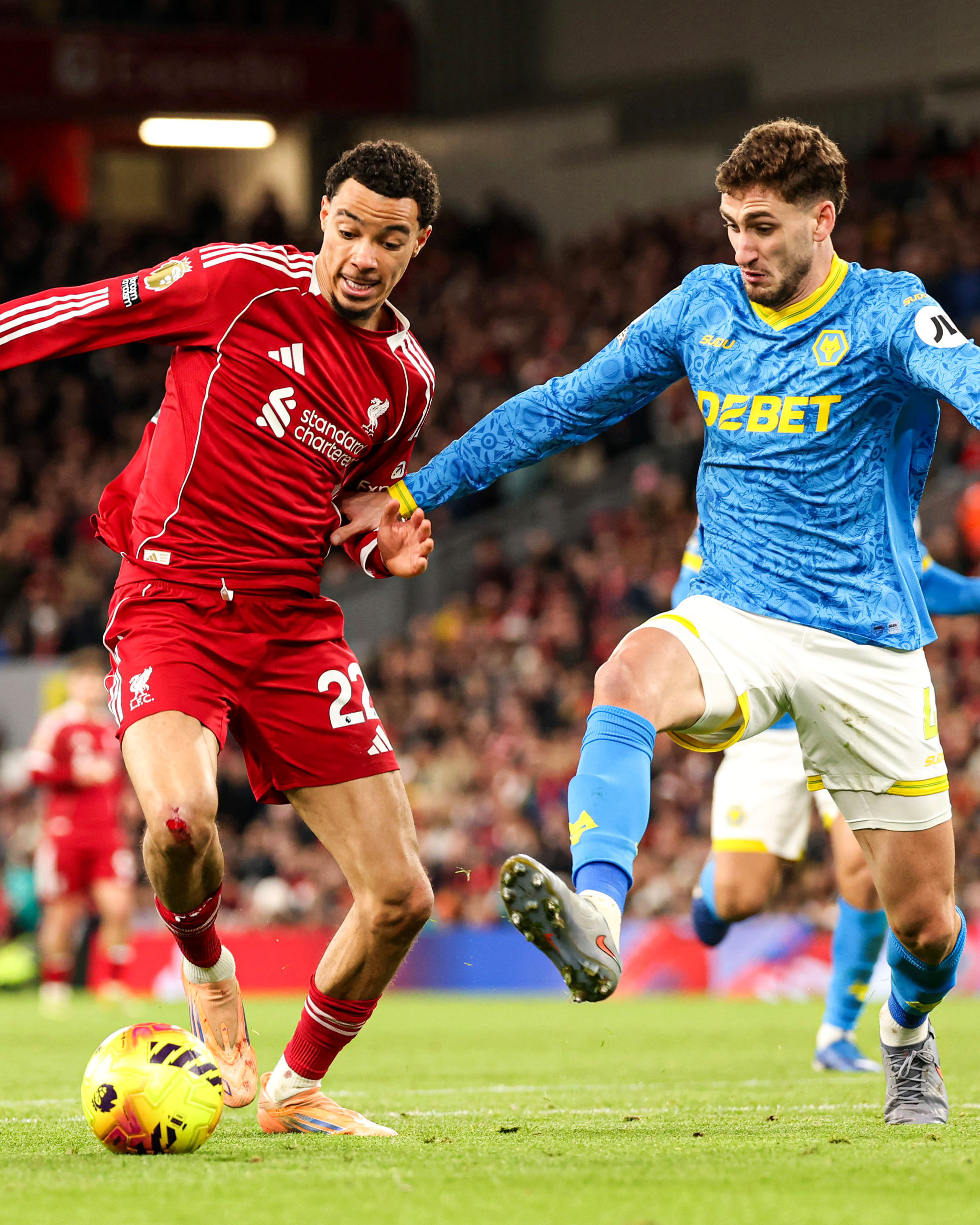
The Premier League fixture between Nottingham Forest and Liverpool on 22 February 2026 at 17:00 is shaping up to be one of the most intriguing clashes of the weekend. Hosted at the historic City Ground, the encounter brings together two clubs with rich histories, evolving tactical identities, and contrasting league objectives.
With the 2025/26 Premier League season entering a decisive phase, this comprehensive preview examines the head-to-head record, recent performances, tactical systems, managerial influence, squad depth, and key statistical trends.
Nottingham Forest vs Liverpool Head-to-Head Stats
The rivalry between Nottingham Forest and Liverpool dates back decades, spanning league and cup competitions. While Liverpool have traditionally held the statistical advantage, Forest have produced several notable results in recent Premier League seasons.
Overall Competitive Head-to-Head Record
| Category | Nottingham Forest | Liverpool |
|---|---|---|
| Matches Played | 14 | 14 |
| Wins | 4 | 7 |
| Draws | 3 | 3 |
| Goals Scored | 17 | 25 |
Liverpool maintain a stronger overall record in terms of victories and goals scored. However, the relatively modest gap highlights that Forest have often been competitive, particularly in modern meetings.
Last Five Premier League Meetings
| Date | Venue | Result |
|---|---|---|
| Nov 22, 2025 | Anfield | Liverpool 0–3 Nottingham Forest |
| Jan 14, 2025 | City Ground | Nottingham Forest 1–1 Liverpool |
| Sep 14, 2024 | Anfield | Liverpool 0–1 Nottingham Forest |
| Mar 2, 2024 | City Ground | Nottingham Forest 0–1 Liverpool |
| Oct 29, 2023 | Anfield | Liverpool 3–0 Nottingham Forest |
Recent Trends
- Forest have won twice at Anfield in recent seasons.
- Liverpool secured a narrow away victory at the City Ground in 2024.
- The most recent meeting ended in a commanding 3–0 victory for Forest.
These results underline how competitive this fixture has become, particularly since Forest’s return to the Premier League.
Current Season Context (2025/26)
Nottingham Forest’s Campaign
The 2025/26 season has been turbulent for Nottingham Forest. Managerial turnover earlier in the campaign created instability, but the recent appointment of Vítor Pereira has introduced renewed structure and belief.
Forest’s league form has been inconsistent, with defensive lapses contributing to a challenging position near the lower half of the table. However, their European involvement in the UEFA Europa League has provided moments of confidence and momentum.
The squad has shown flashes of attacking cohesion, particularly in transition phases. Yet balancing European commitments with domestic survival remains a central theme of their season.
Liverpool’s 2025/26 Trajectory
Under head coach Arne Slot, Liverpool have navigated a campaign marked by evolution and tactical recalibration. Competing in domestic competitions and European fixtures has required intelligent rotation and disciplined structure.
Liverpool currently sit higher in the table than Forest and maintain stronger attacking numbers. Their midfield has displayed improved balance compared to early-season performances, and defensive organization has shown signs of stabilization.
The Reds remain heavily involved in multiple competitions, making squad depth and physical management critical ahead of the February 22 fixture.
Tactical Analysis: Nottingham Forest
Defensive Organization
Under Pereira, Forest appear focused on compact defensive shapes. A narrower structure in midfield limits central penetration and forces opponents wide.
Key defensive characteristics include:
- Compact mid-block positioning
- Aggressive pressing triggers in midfield
- Structured zonal marking during set pieces
Forest’s defensive resilience at the City Ground has often been stronger than in away fixtures, suggesting the importance of home structure.
Transition Threat
Forest’s attacking patterns frequently rely on counter-attacks. Quick vertical passes following turnovers allow wingers and forwards to exploit space behind advancing defensive lines.
In recent matches, pace in wide areas has been central to Forest’s attacking output. Directness remains one of their most effective offensive tools.
Midfield Dynamics
Midfield balance is crucial for Forest. Maintaining discipline while supporting transitions is a delicate tactical requirement.
The midfield trio often alternates between defensive screening and forward surges, attempting to maintain numerical parity against possession-heavy opponents.
Tactical Analysis: Liverpool
High-Pressing Structure
Liverpool’s identity remains closely associated with high pressing and rapid ball recovery. Under Slot, pressing triggers are slightly more structured, with greater emphasis on positional spacing.
Key pressing elements include:
- Forward press initiated by central attackers
- Midfield compression to limit passing lanes
- Full-backs stepping high to sustain territorial dominance
Possession and Width
Liverpool’s attacking structure blends controlled possession with width. Overlapping runs from full-backs stretch opposition defenses, while central midfielders orchestrate tempo shifts.
Players such as Mohamed Salah remain crucial in one-on-one situations, providing both creativity and finishing.
Meanwhile, midfield contributors like Dominik Szoboszlai have added dynamism and late runs into attacking zones.
Defensive Adjustments
Liverpool have refined their defensive transitions this season. Rather than maintaining an extremely high line at all times, situational adjustments allow for deeper compactness when necessary.
This evolution has reduced vulnerability during counter-attacks — an area that Forest may attempt to test.
Statistical Comparison (2025/26 Season)
| Statistic | Nottingham Forest | Liverpool |
|---|---|---|
| Matches Played | 26 | 26 |
| Goals Scored | 25 | 41 |
| Goals Conceded | 38 | 35 |
| Average Possession | 44–48% | 58–62% |
| Clean Sheets | Moderate | Higher |
| Recent Form Trend | Mixed | More Stable |
Liverpool’s superior attacking output reflects their structured pressing and midfield control. Forest’s lower goal tally highlights offensive inconsistency but does not diminish their capacity for impactful performances.
Key Battles to Watch
Midfield Control
Forest’s compact midfield must contend with Liverpool’s ball circulation. The ability to disrupt passing rhythms without losing positional discipline will shape the flow of play.
Wide Channels
Liverpool’s full-backs frequently push high, which can leave transitional spaces. Forest’s wingers may look to exploit these zones during turnovers.
Conversely, Liverpool’s width and crossing accuracy will test Forest’s defensive coordination.
Set Pieces
Both teams have demonstrated competence in set-piece execution. Liverpool often rely on rehearsed routines, while Forest emphasize physical presence.
Dead-ball situations could become important phases of sustained pressure.
Historical Context of the Rivalry
The rivalry between these clubs carries historical significance. Nottingham Forest’s golden era under Brian Clough saw the club rise to domestic and European prominence, while Liverpool established themselves as one of England’s most decorated institutions.
Over decades, their meetings have oscillated between dominant Liverpool displays and resilient Forest performances.
Recent Premier League campaigns have narrowed the gap in competitiveness, reflecting Forest’s improved recruitment strategy and tactical growth.
Psychological and Environmental Factors
Home Advantage
The City Ground remains one of the Premier League’s most atmospheric venues. Crowd intensity often influences tempo, particularly in early phases.
Forest’s confidence at home has been a stabilizing factor during turbulent stretches.
Fixture Congestion
With both teams participating in domestic and European competitions, physical conditioning and squad rotation will be influential. February fixtures frequently test recovery management and depth.
Squad Depth Comparison
Liverpool’s bench options often include experienced internationals capable of changing match tempo. This depth provides flexibility in response to tactical shifts.
Forest, while strengthened in recent transfer windows, rely more heavily on core starters. Rotation strategies may prioritize defensive solidity.
Media Spotlight and League Implications
The February 22 clash draws considerable attention due to:
- Forest’s managerial reset
- Liverpool’s European ambitions
- Recent surprising head-to-head results
While avoiding predictions, it is clear that fixtures of this magnitude influence broader league narratives, momentum, and supporter morale.
Playing Style Contrast
| Tactical Feature | Nottingham Forest | Liverpool |
|---|---|---|
| Build-Up Style | Direct, vertical | Structured, possession-based |
| Pressing | Selective | High and coordinated |
| Defensive Shape | Mid-block | Variable line height |
| Transition Speed | Rapid counters | Controlled with bursts |
| Set Pieces | Physical emphasis | Tactical routines |
These stylistic differences create compelling football dynamics, making the contest tactically fascinating.
Final Thoughts
The February 22, 2026 Premier League fixture between Nottingham Forest and Liverpool represents more than a routine league match. It encapsulates:
- Historical rivalry
- Tactical evolution
- Managerial adaptation
- Squad depth management
- Statistical contrasts
Forest seek consistency and structural clarity under Vítor Pereira, while Liverpool continue refining their system under Arne Slot amid multi-competition demands.
With detailed head-to-head data, recent performance trends, and tactical analysis considered, the stage is set for a captivating contest at the City Ground.
As the 17:00 kickoff approaches, supporters and analysts alike will focus on structure, intensity, and execution in what promises to be a compelling Premier League encounter — one shaped by history, sharpened by ambition, and defined by tactical nuance.