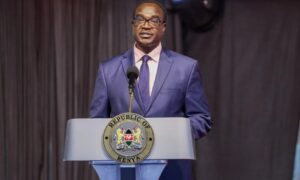
There was high drama at the Senate of Kenya after lawmakers moved to compel Lati Lelelit to appear before the powerful County Public Accounts Committee (CPAC) over audit queries.
The standoff unfolded on April 1, 2026, when Senate Speaker Amason Kingi ordered the Sergeant-at-Arms to take action against the Samburu governor after he allegedly failed to honor repeated summons by the oversight committee. Reports indicate that Lelelit had been spotted within Parliament buildings despite an active warrant issued against him for skipping CPAC sessions.
Why senators are pursuing Lelelit
The confrontation is part of a broader push by the Senate to enforce accountability among county chiefs. CPAC has been reviewing financial statements for recent financial years, and several governors—including Lelelit—have been accused of repeatedly snubbing summons.
Parliamentary oversight rules require governors to appear before Senate committees when called upon, particularly on matters involving the use of public funds. Failure to comply raises concerns among lawmakers over transparency and accountability in county spending.
The committee has in recent months explored stricter enforcement measures—including arrests and possible sanctions—to compel non-compliant governors to cooperate with the audit process.
Governors push back
However, the incident has exposed a growing standoff between the Senate and the Council of Governors Kenya (CoG), which has defended the boycott of CPAC sittings.
CoG leadership has argued that the decision by governors to skip the hearings was collective, citing allegations of harassment and intimidation by some members of the committee. The council has also criticized what it terms the use of force in attempting to compel governors to appear, warning that such actions could strain relations between national and county governments.
Arrest threats escalate tensions
The Senate’s hardline stance has seen multiple governors come under pressure over failure to honor summons. Lawmakers insist that compliance is not optional and that governors must be held accountable for how public resources are managed.
Speaker Kingi maintained that failure to comply with Senate summons is a serious breach of constitutional oversight requirements, emphasizing that no public official is above the law.
What next?
With tensions still high, the fate of Governor Lelelit remains uncertain as enforcement measures intensify. The Senate appears determined to assert its oversight authority, while governors continue to resist CPAC proceedings unless their concerns are addressed.
The unfolding drama signals a deeper institutional conflict that could shape how accountability is enforced in Kenya’s devolved system of government, especially as pressure mounts on county leaders to answer audit queries.