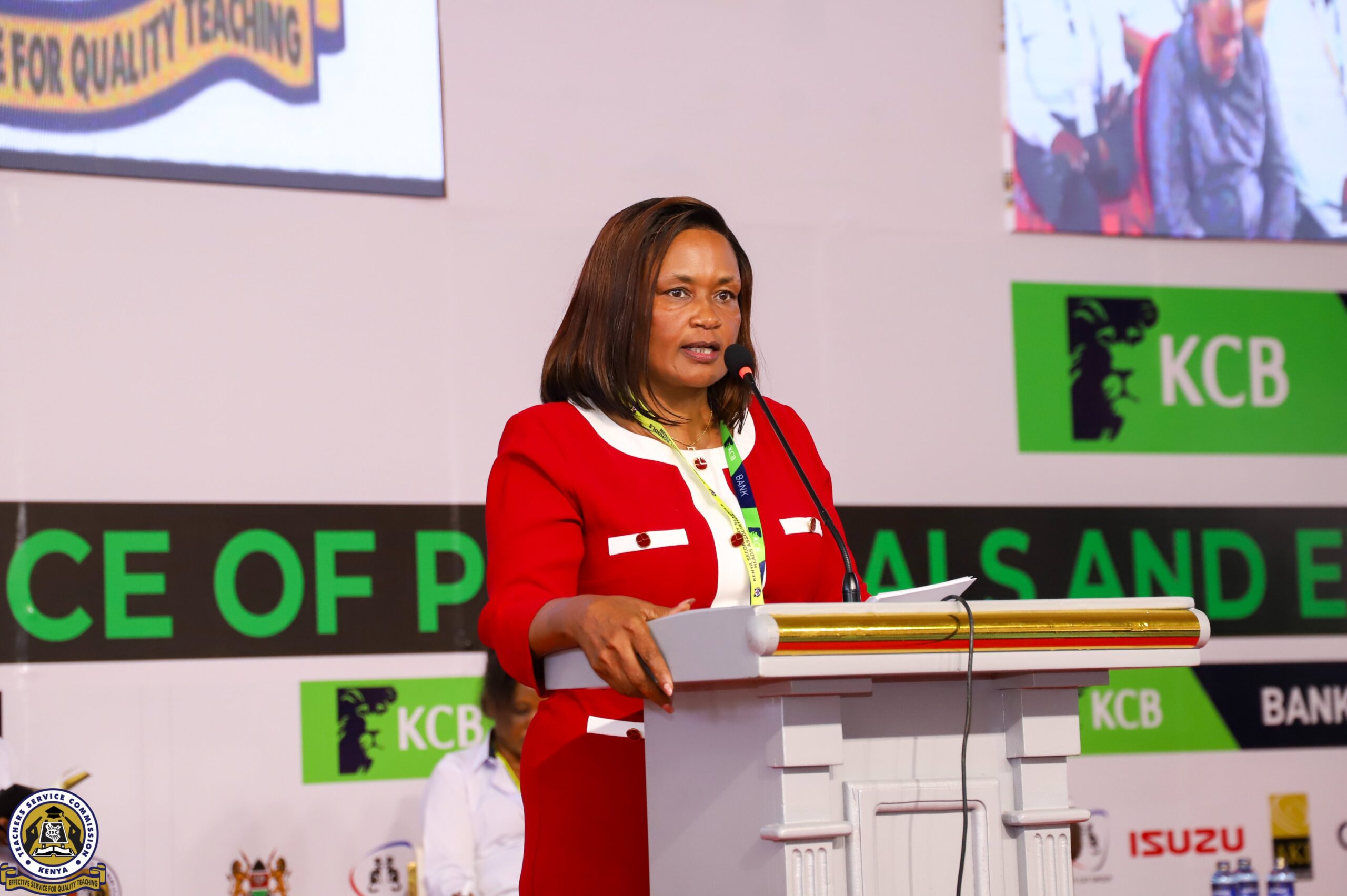
Kenya’s education sector continues to undergo significant transformation as stakeholders work together to implement reforms aimed at improving learning outcomes, teacher development, and institutional efficiency. During the 49th Kenya Secondary School Heads Association (KESSHA) Annual Conference 2026 held in Mombasa, Teachers Service Commission (TSC) Acting Chief Executive Officer Ms. Evaleen Mitei, MBS, delivered a powerful message emphasizing the critical role of education in national development.
Addressing hundreds of school principals, education leaders, policymakers, and stakeholders, Ms. Mitei highlighted that Kenya’s education transformation extends beyond policy formulation and depends heavily on strong leadership, collaboration, and effective implementation at all levels.
Kenya’s Education Transformation Driven by Leadership and Partnerships
Speaking at the conference, Ms. Mitei noted that education remains one of the most powerful tools for social transformation, economic growth, and national development. She stressed that successful education reforms require collective efforts from teachers, school administrators, government institutions, parents, and development partners.
According to the TSC Acting CEO, educational policies can only achieve their intended impact when institutions entrusted with delivering education services effectively implement them.
“Kenya’s education transformation goes beyond policy; it is driven by people, partnerships, and purposeful leadership,” Ms. Mitei stated during her address.
Her remarks come at a time when Kenya is implementing major reforms under the Competency-Based Education (CBE) framework, which seeks to equip learners with practical skills, competencies, and values necessary for the modern workforce.
TSC Commits to Supporting Competency-Based Education
One of the key highlights of Ms. Mitei’s address was the Teachers Service Commission’s continued commitment to supporting the implementation of Competency-Based Education.
The transition to CBE has required substantial changes in teaching methodologies, curriculum delivery, assessment systems, and teacher preparedness. Recognizing these challenges, TSC has prioritized continuous teacher retooling and professional development.
Ms. Mitei reaffirmed that the Commission will continue investing in capacity-building programs aimed at equipping teachers with the skills and knowledge needed to effectively deliver the new curriculum.
Key TSC Commitments Include:
- Aligning policies with national education goals and international education frameworks.
- Strengthening teacher capacity through continuous professional development and retooling.
- Enhancing accountability and professionalism among teachers.
- Promoting ethical standards in the teaching profession.
- Ensuring equitable distribution of teachers across the country.
- Supporting quality learning outcomes for all students.
The focus on teacher training remains a critical pillar in the successful implementation of Competency-Based Education across Kenya.
Teacher Professional Development Remains a Priority
Teacher quality continues to be one of the most important determinants of learner success. To address emerging educational needs, TSC has intensified efforts to support continuous professional development programs for teachers.
Through structured training initiatives, teachers are being equipped with modern instructional approaches, digital literacy skills, learner-centered teaching methods, and assessment techniques aligned with CBE requirements.
Education experts attending the conference noted that continuous professional development is essential in helping teachers adapt to changing educational demands while maintaining high standards of classroom instruction.
The Commission believes that investing in teachers ultimately translates into improved student performance and better educational outcomes nationwide.
TSC Strengthens Accountability and Performance Management
Another major area highlighted by Ms. Mitei was the importance of accountability and professionalism in the education sector.
The Teachers Service Commission has continued to implement performance management systems designed to enhance efficiency, improve service delivery, and strengthen teacher accountability.
These systems help schools monitor performance, track educational progress, and identify areas requiring intervention.
According to TSC, maintaining professional and ethical standards among teachers is critical in building public confidence in the education system.
School leaders were encouraged to support performance management initiatives while fostering a culture of integrity, transparency, and responsibility within their institutions.
Equitable Distribution of Teachers Remains a Key Focus
Teacher shortages and imbalances in staffing continue to affect learning outcomes in some parts of the country. To address this challenge, TSC reiterated its commitment to ensuring equitable distribution of teachers.
Ms. Mitei noted that optimal utilization of available teaching resources remains essential in guaranteeing quality education for all learners regardless of geographical location.
The Commission has been implementing recruitment, deployment, and transfer policies aimed at addressing staffing gaps in underserved regions.
Education stakeholders have consistently emphasized that equitable teacher allocation is necessary to reduce disparities between schools and improve access to quality education.
Technology and Data-Driven Systems Shaping the Future of Education
As Kenya embraces digital transformation, TSC is increasingly leveraging technology to improve service delivery and educational management.
Ms. Mitei highlighted the importance of data-driven and technology-enabled systems in supporting effective decision-making within the education sector.
Digital platforms have enhanced teacher management processes, professional development programs, payroll administration, and communication between educational institutions and stakeholders.
The adoption of technology is also expected to play a major role in monitoring educational outcomes and improving overall system efficiency.
Education experts argue that technology integration will be critical in preparing learners for the demands of the digital economy.
Inclusive Education Remains at the Heart of Reforms
The Acting CEO emphasized that inclusivity remains a central pillar of Kenya’s education reforms.
The government’s vision seeks to ensure that every learner, regardless of background, location, gender, or ability, has access to quality education opportunities.
TSC continues to collaborate with education stakeholders to promote inclusive learning environments that accommodate diverse learner needs.
By strengthening teacher capacity and improving resource allocation, the Commission hopes to create equitable opportunities for all students to thrive.
Inclusive education has become increasingly important as Kenya works toward achieving Sustainable Development Goal 4, which advocates for quality education and lifelong learning opportunities for everyone.
School Principals Urged to Lead Education Reforms
In her closing remarks, Ms. Mitei challenged school principals to remain committed to their role as frontline implementers of education policies.
She acknowledged that school leaders play a vital role in translating national education policies into practical actions that directly impact learners.
“Your role as Principals in driving education sector reforms through policy implementation is critical. Remain focused, dedicated, and steadfast as implementers of these policies,” she told conference participants.
The message resonated strongly with school heads attending the KESSHA conference, many of whom are currently overseeing the transition to Competency-Based Education in secondary schools.
Education analysts note that the success of ongoing reforms will largely depend on the leadership, innovation, and dedication demonstrated by school administrators across the country.
KESSHA Conference Highlights Importance of Collaboration
The annual KESSHA conference continues to provide a crucial platform for discussing educational challenges, sharing best practices, and strengthening collaboration among stakeholders.
This year’s conference focused heavily on the future of education, leadership, digital transformation, teacher preparedness, and policy implementation.
Participants explored strategies for improving learning outcomes while addressing challenges associated with curriculum reforms and resource allocation.
The conference also underscored the importance of partnerships between government agencies, school leaders, teachers, parents, and development organizations.
Future of Kenya’s Education Sector
The address by Ms. Evaleen Mitei reaffirmed the Teachers Service Commission’s unwavering commitment to supporting education reforms and strengthening learning institutions across Kenya.
As the country advances the implementation of Competency-Based Education, stakeholders remain optimistic that continued investments in teacher development, technology integration, accountability systems, and inclusive education will deliver positive outcomes for learners.
With school leaders, teachers, policymakers, and communities working together, Kenya’s education sector is positioning itself to produce graduates equipped with the skills, competencies, and values required to succeed in an increasingly competitive global environment.
The message from the KESSHA Annual Conference was clear: transforming education requires more than policies. It requires dedicated leadership, strong partnerships, continuous professional development, and a shared commitment to ensuring every learner receives quality education.