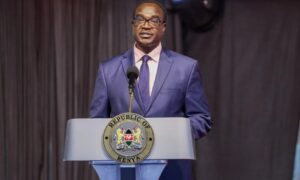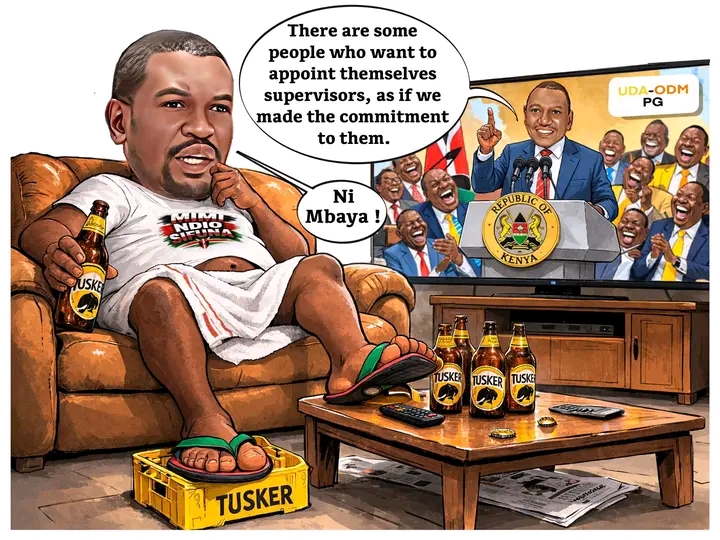
Kenyan politics has never been short of dramatic twists, shifting loyalties, and rising or falling political stars. Leaders who appear powerful today can quickly find themselves isolated tomorrow as alliances change and party dynamics evolve. Few figures illustrate this unpredictable nature better than .
Once celebrated as one of the most vocal and energetic defenders of the opposition, Sifuna built a reputation as a fierce political communicator and loyal party mobilizer. For years, he stood at the center of the political machinery of , a party long associated with opposition politics under the leadership of the Late Raila Amolo Odinga.
Yet recent developments suggest that Sifuna’s political future may be entering uncertain territory. Internal party tensions, strategic disagreements, and growing criticism from rivals have triggered intense speculation about whether his influence could diminish significantly before the 2027 general elections.
Could Sifuna truly fade from the political spotlight? Or is this simply another turbulent phase in a long and evolving political career?
To understand why some observers believe his influence may weaken in the coming years, it is necessary to examine his rise in Kenyan politics, the controversies surrounding his leadership, and the challenges that now threaten his political standing.
From Lawyer to National Political Figure
Born in Mumias in Kakamega County in western Kenya, Sifuna began his professional journey as a lawyer before stepping into the political arena. After studying law at the University of Nairobi and later qualifying at the Kenya School of Law, he was admitted to the bar and started practicing as an advocate.
However, Sifuna’s ambitions soon extended beyond the courtroom. Like many young professionals inspired by political change in Kenya, he was drawn into public service and policy debates.
His early political involvement came through advisory roles in opposition coalitions, where he developed expertise in legal and political strategy. These roles gradually increased his visibility and positioned him as a rising figure within opposition circles.
But it was his involvement with the Orange Democratic Movement that truly transformed his career.
Becoming the Voice of ODM
In 2018, Sifuna was appointed Secretary General of the Orange Democratic Movement, one of the most influential positions within the party.
The appointment marked a major turning point in his career. As Secretary General, he became responsible for communicating party policy, coordinating internal party structures, and defending the organization against political rivals.
At the time, ODM was firmly established as one of Kenya’s most powerful opposition parties under the leadership of Raila Odinga. The party required a spokesperson who could articulate its vision and defend its policies in an increasingly competitive political environment.
Sifuna quickly embraced this role.
His sharp debating skills, direct communication style, and willingness to confront opponents made him a familiar face on television talk shows, political rallies, and social media debates.
Supporters praised him as a fearless defender of the opposition cause. Critics, however, often described him as overly combative and confrontational.
Either way, he succeeded in making himself one of the most recognizable political voices in the country.
Early Electoral Setbacks
Despite his growing popularity within ODM, Sifuna initially struggled to convert political visibility into electoral victory.
In 2017, he contested the Nairobi Senate seat but lost the race in a competitive election. For many politicians, such a defeat might have marked the end of a political career.
But Sifuna remained active within the party leadership and continued to strengthen his political networks.
This persistence eventually paid off.
Victory in the Nairobi Senate Race
The 2022 general elections marked a major breakthrough for Sifuna.
Running again for the Nairobi senatorial seat under the ODM banner, he won a decisive victory and became the senator representing Kenya’s capital city.
The win significantly elevated his national political profile.
As senator, Sifuna gained a legislative platform from which he could influence national debates on governance, economic policy, and political reform. His election also strengthened his position within the opposition coalition.
Soon after entering the Senate, he was appointed Deputy Minority Whip, another leadership role that expanded his influence within parliamentary politics.
For many observers, his career seemed to be on a steady upward trajectory.
However, beneath the surface, internal tensions within his party were already beginning to emerge.
Growing Friction Within ODM
Political parties are rarely free from internal disagreements. ODM itself has experienced numerous internal debates throughout its history.
But in recent years, divisions within the party have become more visible.
One of the central disagreements revolves around how the opposition should relate to the government led by .
Some ODM leaders have advocated a more cooperative approach, seeking dialogue and engagement with the government. Others prefer a stronger opposition stance that emphasizes confrontation and political pressure.
Sifuna has often been associated with the more hardline faction that prefers a clear and uncompromising opposition strategy.
While this position resonates with some party supporters, it has also brought him into conflict with leaders who favor a more pragmatic approach.
Leadership Disputes and Party Tensions
As internal disagreements intensified, tensions between Sifuna and other senior figures within ODM became more visible.
Critics within the party began accusing him of publicly contradicting party decisions and undermining internal unity.
Some leaders argued that his outspoken statements were damaging the party’s strategic positioning in national politics.
Supporters, on the other hand, insisted that Sifuna was simply defending the principles of opposition politics and refusing to compromise on core values.
Regardless of the interpretation, the disagreements highlighted a growing divide within the party leadership.
The Controversy Over His Party Position
One of the most dramatic developments in Sifuna’s political journey came when internal party disputes escalated into leadership battles.
Some party figures pushed for disciplinary action against him, arguing that he had violated party rules or undermined collective decisions.
At one point, discussions emerged about removing him from key party roles, triggering intense debate among party members and supporters.
These events exposed the fragile nature of political power within party structures.
Even leaders who appear influential can quickly face challenges if internal alliances shift.
For Sifuna, the controversy raised serious questions about the durability of his influence within ODM.
Critics Predict a Political Decline
Several political observers believe these internal conflicts could weaken Sifuna’s standing ahead of the 2027 elections.
According to critics, his confrontational style and disagreements with senior party leaders could eventually isolate him within ODM.
Some analysts have even suggested that he could lose key leadership positions in Parliament if tensions continue to escalate.
Others argue that internal party discipline may ultimately limit his influence.
In politics, perception often shapes reality. If enough leaders within a party believe a figure is becoming divisive, they may gradually push that individual aside in favor of new leadership.
The Risks of a Polarizing Political Style
Sifuna’s political style has always been one of his greatest strengths—and potentially one of his biggest vulnerabilities.
His direct and outspoken approach attracts strong support from voters who admire leaders willing to speak boldly.
However, such a style can also generate friction within party structures that rely on consensus and strategic messaging.
Political parties often prioritize unity and discipline. Leaders who frequently challenge internal decisions may find themselves at odds with party hierarchies.
In Sifuna’s case, the same qualities that made him popular among supporters may have contributed to tensions with fellow party leaders.
Why 2027 Could Be a Defining Moment
The next general election cycle could prove decisive for Sifuna’s political career.
By 2027, several key factors will shape his future:
- Internal ODM dynamics
If party tensions remain unresolved, he could face significant resistance from rival factions. - Opposition coalition politics
The structure of opposition alliances could either strengthen or weaken his influence. - Public perception among Nairobi voters
As senator for the capital city, his political survival will depend heavily on maintaining voter support. - Leadership changes within the opposition
The emergence of new political figures could reshape the balance of power within ODM.
Taken together, these factors mean that the coming years could either consolidate Sifuna’s career or mark the beginning of a political decline.
Why It Might Be Too Early to Write Him Off
Despite the challenges he faces, it would be premature to declare Sifuna politically finished.
Kenyan politics has repeatedly demonstrated that leaders can recover from setbacks and reinvent themselves.
Several advantages remain on his side.
First, his national visibility remains strong due to his role as Nairobi senator.
Second, his communication skills continue to make him one of the most recognizable political voices in the country.
Third, he still retains a base of supporters who see him as a principled defender of opposition politics.
These factors mean that his political future is far from predetermined.
The Unpredictable Nature of Kenyan Politics
Perhaps the most important lesson from Sifuna’s story is the unpredictable nature of political power.
Kenya’s political landscape is constantly shifting as alliances evolve and new leaders emerge.
Figures who appear dominant in one election cycle may struggle in the next, while those who seem marginalized sometimes return stronger than before.
Sifuna’s career reflects these cycles of rise, conflict, and potential reinvention.
Conclusion
The claim that Edwin Sifuna will soon become politically irrelevant may reflect the views of his critics or the ambitions of his rivals.
However, politics is rarely so straightforward.
While internal party conflicts and leadership disputes have created uncertainty around his future, Sifuna remains a prominent political figure with significant public visibility.
Whether he ultimately loses influence or stages another political comeback will depend on how he navigates the complex dynamics within ODM and the broader opposition landscape.
As Kenya moves closer to the 2027 elections, one thing is certain: the political story of Edwin Sifuna is still unfolding.