
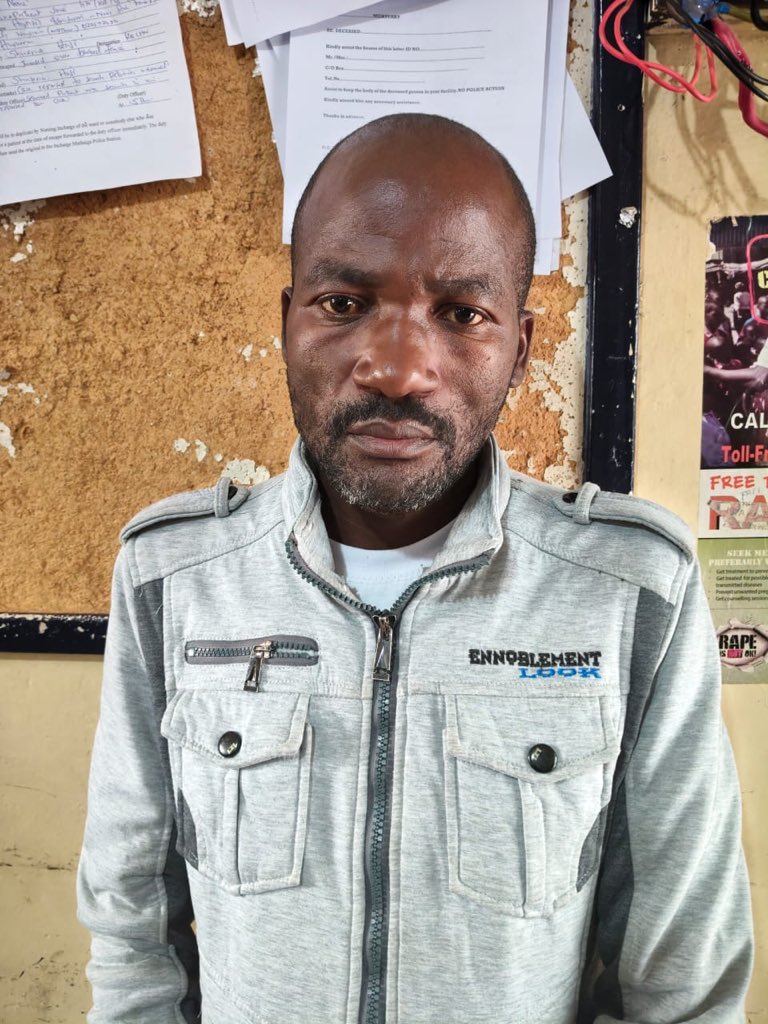
Hospital Boss Charged Over Sh2.5M SHA Fraud Scandal as Court Orders Remand
A senior hospital executive has been dragged before the courts in a case that has sent shockwaves through Kenya’s healthcare sector, after authorities accused him of orchestrating a sophisticated fraud scheme targeting the Social Health Authority (SHA). The case has reignited public debate over the misuse of public healthcare funds and the growing threat of fraud within medical institutions.
Josephat Ouma Omoto, the Director of Zion Ahadi Hospital in Kakamega County, was on Thursday arraigned before the Milimani Law Courts in Nairobi, where he faced multiple criminal charges linked to the alleged fraudulent acquisition of Sh2.5 million from the Social Health Authority.
Alleged Scheme to Defraud SHA
According to prosecutors, Omoto is accused of deliberately devising and executing a plan aimed at unlawfully obtaining public funds through fabricated medical claims. The court heard that the hospital director allegedly made false representations to SHA by manipulating health-related documents that were submitted for reimbursement.
Investigators allege that the documents were deliberately falsified to give the impression that legitimate medical services had been provided to patients under the SHA system, when in fact the claims were either exaggerated or entirely fictitious. Through this scheme, Omoto is said to have fraudulently received Sh2.5 million, money that was intended to support genuine healthcare services for Kenyans.
The prosecution argued that the alleged fraud not only resulted in financial loss to the public but also undermined trust in the country’s health financing system, which is designed to ensure equitable access to medical care.
Multiple Criminal Charges Filed
Omoto is facing a raft of serious charges under Kenyan law. Chief among them is obtaining money by false pretences, an offence under Section 313 of the Penal Code, which carries stiff penalties upon conviction.
He has also been charged under Section 48(5) of the Social Health Authority Act for the falsification of health documents, an offence that directly targets fraudulent manipulation of medical records submitted to the authority.
In addition, the hospital director faces charges related to acquiring and using proceeds of crime, contrary to Section 4(a) and (b) as read with Section 16(1) of the Proceeds of Crime and Anti-Money Laundering Act (POCAMLA). These charges suggest that investigators believe the funds obtained through the alleged fraud were knowingly received and used, compounding the seriousness of the case.
Legal experts note that cases involving POCAMLA often attract heightened scrutiny due to their implications for financial integrity and public accountability.
Accused Denies Charges in Court
When presented with the charges, Omoto pleaded not guilty to all counts. His legal team maintained that he is innocent and will vigorously contest the allegations when the matter proceeds to full hearing.
Despite the denial, the court ordered that Omoto be remanded at Industrial Area Prison, pending further proceedings. The magistrate directed that the accused remain in custody as the court considers his application for bail.
The matter is scheduled for mention on Monday, January 12, 2026, when the court is expected to deliver a ruling on whether Omoto will be released on bail or continue to be held as the case progresses.
DCI Steps Up Crackdown on SHA Fraud
The case forms part of a wider crackdown by the Directorate of Criminal Investigations (DCI) on fraud targeting the Social Health Authority and other public institutions. In a statement following the arraignment, the DCI reaffirmed its commitment to aggressively investigate and prosecute individuals involved in the theft or misuse of public funds.
“The Directorate remains relentless in pursuing all persons involved in defrauding public institutions and will ensure that those found culpable are held fully accountable,” the agency said.
Authorities have in recent months raised concerns about the vulnerability of healthcare financing systems to abuse, particularly through false claims, inflated invoices, and forged documentation submitted by unscrupulous service providers.
Public Funds and Healthcare Integrity at Stake
The alleged fraud has sparked public outrage, with many Kenyans expressing concern that resources meant to improve healthcare delivery are being siphoned off through corruption. The Social Health Authority plays a critical role in financing medical services, especially for vulnerable populations who rely heavily on public support for treatment.
Healthcare analysts warn that fraudulent claims not only drain limited resources but also reduce the ability of SHA to reimburse legitimate facilities promptly, potentially disrupting services for patients who depend on them.
“This is not just a financial crime; it is a moral failure,” said a healthcare governance expert familiar with similar cases. “When funds meant for patient care are stolen, it is ordinary Kenyans who ultimately suffer.”
Wider Implications for Hospitals and Practitioners
The case against Omoto is expected to send a strong signal to hospital administrators and medical practitioners across the country. Regulatory bodies and law enforcement agencies have repeatedly warned that healthcare fraud will attract severe legal consequences, regardless of an individual’s position or influence.
Hospitals participating in SHA programs are required to maintain strict compliance with documentation standards, ethical billing practices, and transparent financial reporting. Any deviation from these requirements, authorities say, will be treated as a criminal offence.
What Happens Next
As the case moves forward, attention will now turn to the bail ruling expected on January 12 and the subsequent trial, where prosecutors are expected to present documentary evidence and witness testimony to support the charges.
For now, Omoto remains in custody, and Zion Ahadi Hospital has not publicly commented on the case. The outcome of the trial could have far-reaching consequences, not only for the accused but also for how healthcare fraud cases are investigated and prosecuted in Kenya.
As authorities intensify efforts to safeguard public resources, the case serves as a stark reminder that the misuse of healthcare funds will not go unchecked—and that accountability in the health sector is becoming increasingly unavoidable.





















