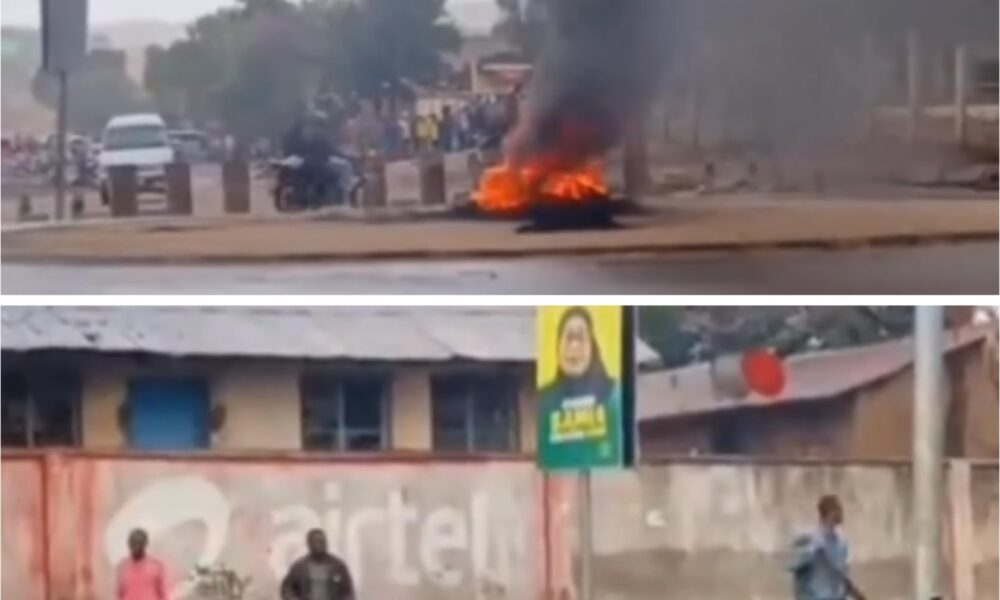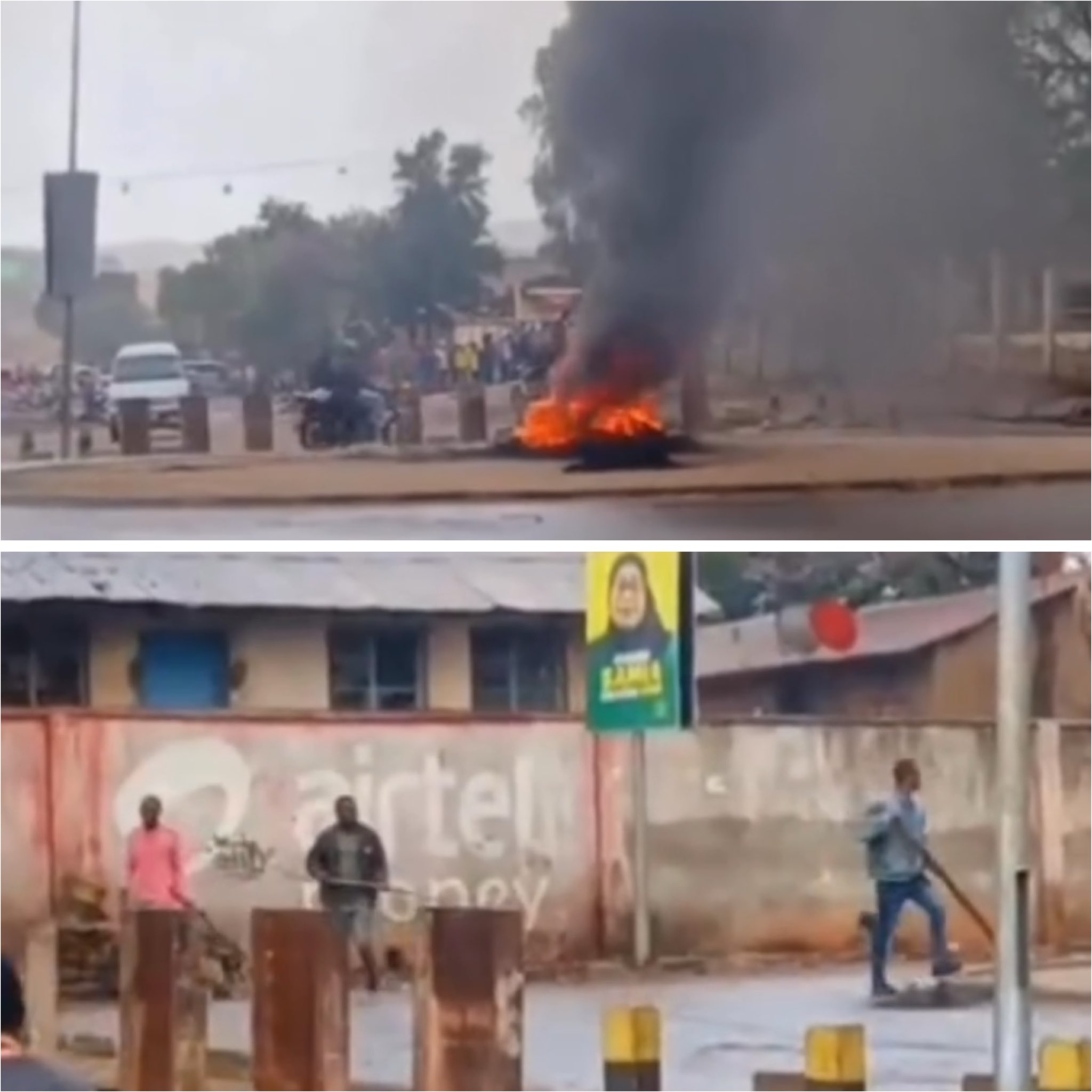
Border tensions flared Wednesday night at the Namanga crossing between Kenya and Tanzania when a group of Kenyan youths, angered by reports that fellow Kenyans were being barred from entering Tanzania, lit bonfires, raised slogans and vowed to reject the outcome of the Tanzanian presidential election.
The unrest was triggered when Tanzanian authorities reportedly prevented a section of Kenyans from crossing into Tanzania to join neighbours in solidarity under the regional spirit of the East African Community (EAC). In response, youth groups on the Kenyan side mobilised, gathered around the one-stop border post, and staged an impromptu protest, igniting both flames and tension.
The spark at Namanga
Border videos and witness statements indicate that as word spread of Kenyans being turned back, groups of young people started lighting bonfires near the border road and blocking traffic. The move seemed partly symbolic — rejecting restrictions on cross-border movement and expressing anger at perceived discrimination of Kenyans wanting to cross into Tanzania. Some traders and travellers said they were ready to participate in post-election solidarity marches inside Tanzania but found themselves stopped at the crossing.
The border town of Namanga is a key route in the EAC region, facilitating movement of people, goods and cross-border trade. The normally calm transit point between southern Kenya and northern Tanzania turned volatile in a matter of hours. The context comes amid wider protests in Tanzania over the presidential election outcome, making the border scene an unexpected flashpoint.
Why it matters
The incident reveals fault-lines in regional integration, free movement and cross-border relations. For decades the EAC has emphasised the free passage of goods and people among partner states. At a time when Kenyans were reportedly prevented from joining neighbours in Tanzania, the principle of shared access was challenged. Moreover, the flare of protest at the border underlines how national politics — in this case Tanzania’s election and its domestic response — can spill over into neighbouring states.
Trade and transit along the Kenya-Tanzania border are vital. When youth protests erupted at Namanga, transport operators and traders voiced concern about interruption of traffic, delays in cargo clearance and the potential for supply bottlenecks. For border communities that rely on the movement of people, families and goods, the unrest raised alarm about business disruptions and everyday livelihoods.
Local voices and impact
Traders and transport operators at Namanga reported that the protest caused trucks and vehicles to stop temporarily as the protestors blocked access. The gathering of youths with bonfires and vocal slogans created uncertainty, prompting some transporters to pause departures until security cleared the road. Business-people warned that even a short closure in transit flows through Namanga could trigger supply chain glitches on both sides of the border.
Residents expressed frustration. One local said that the blocking of movement conflicted with the expectation of border towns being gateways rather than obstacles. Many Kenyans living and working in border zones like Namanga depend on free passage into Tanzania for trade and visitation. The sudden disruption highlighted how quickly these arrangements can be upset when political tensions arise.
The wider Tanzanian backdrop
The protest at Namanga must be seen in the context of election-related unrest in Tanzania. In the aftermath of the presidential vote, demonstrations broke out in several Tanzanian cities alleging lack of fair competition and suppression of opposition. The government responded with curfews, internet disruptions and heightened security presence. Movements across the border became sensitive as authorities sought to limit external support for protests and curb cross-border spill-ins. This national context helps explain why crossings at places like Namanga may have been more tightly managed and why frustration among travellers and border communities turned into protest.
What to watch now
- Border flow clarity: Will crossings at Namanga return to normal soon? Transporters and traders will be keen to see if access is eased or remains restricted.
- Diplomatic signals: Kenya’s foreign policy and Tanzania’s immigration and border authorities may issue clarifications or joint statements to calm jitters and reassure traders and travellers.
- Business-ripple effects: Monitor supply chains, especially for perishable goods and cross-border trade flows that use Namanga. Delays may raise costs and ripple into local market prices.
- Youth mobilisation: The bonfire-fueled protest by young people signals that border towns are not immune to political shocks. Further activism or unrest could complicate security and trade at frontier zones.
- Regional integration stress-test: The episode raises questions about the robustness of the free-movements regime under the EAC, especially when national politics intrude. How partner states manage border disruptions will influence confidence in East African cooperation.
Final word
What looked like a routine border crossing at Namanga turned into a protest scene as Kenyans, angered at being blocked from entering Tanzania, took to the streets with bonfires and defiance. At stake are more than just movement rights — this episode strikes at the heart of regional unity, trade, local livelihoods and the promise of seamless borders. If the situation is not carefully managed, the episode at Namanga could mark the beginning of a wider border-shock ripple across the Kenya-Tanzania frontier.