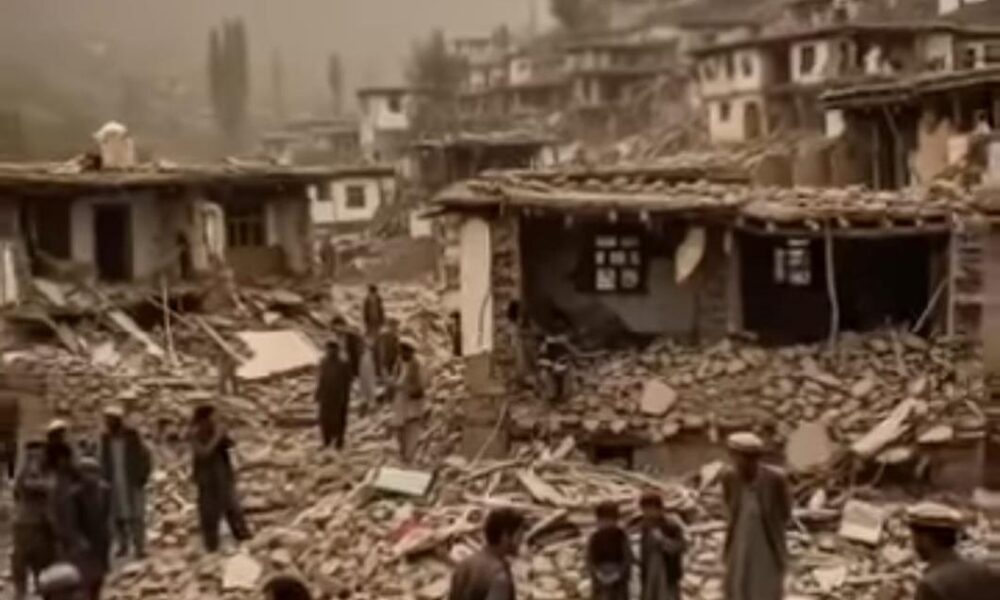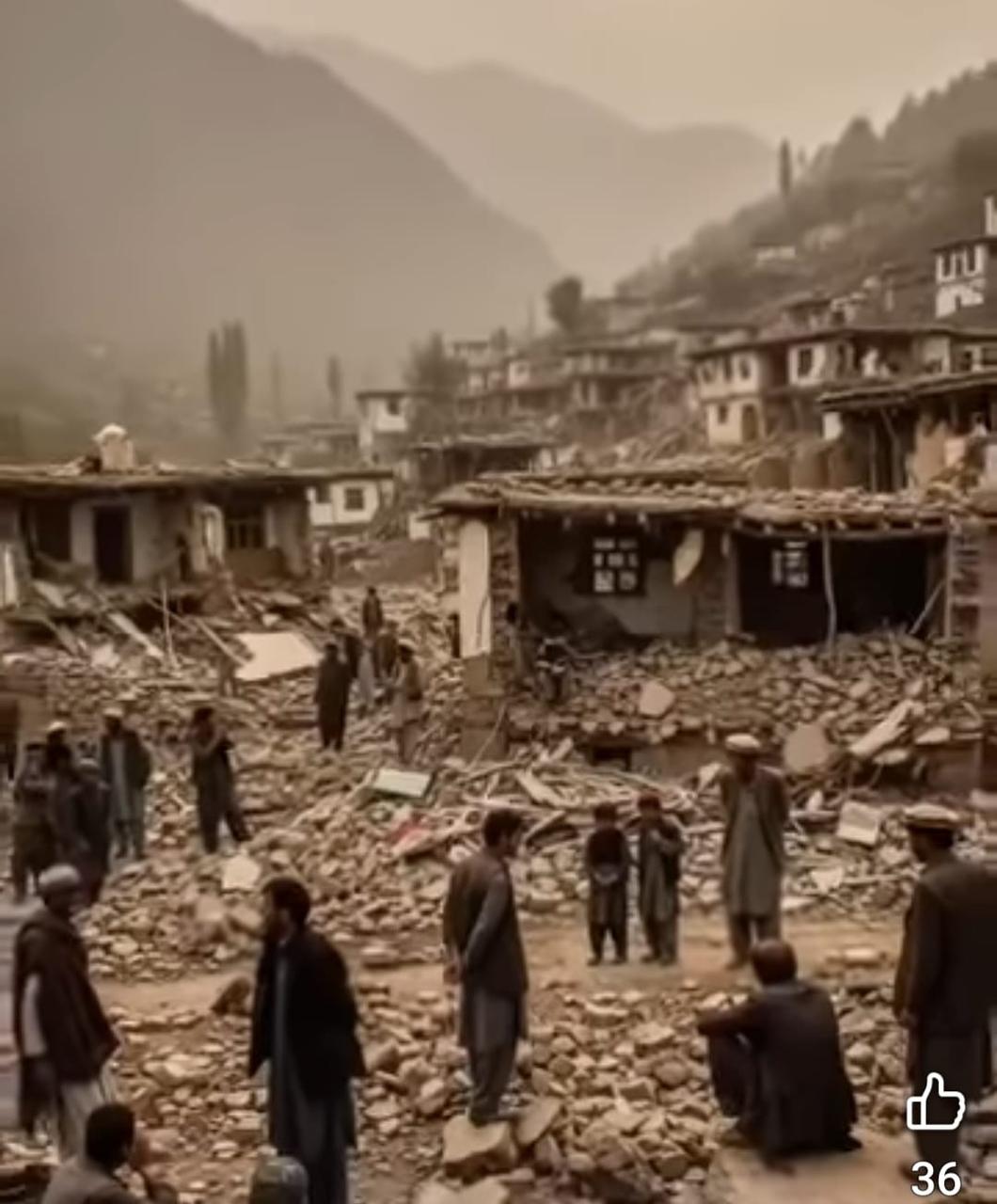
Afghanistan has been rocked by one of its deadliest disasters in recent years, as powerful afghanistan earthquakes struck the eastern region, killing more than 800 people and leaving thousands more injured. The magnitude 6.0 quake, which struck at a shallow depth of just 8km (5 miles), devastated provinces along the mountainous border with Pakistan and sent tremors as far as Kabul and Islamabad.
According to the United Nations Office for the Coordination of Humanitarian Affairs (OCHA), preliminary reports suggest that at least 2,000 people have been injured and more than 12,000 people have been directly affected by collapsed homes, destroyed infrastructure, and blocked roads. Officials warn that the toll may rise sharply as rescue teams struggle to access remote villages in Nangarhar and Kunar provinces — the epicenter of the quake.
A Night of Terror: When the Earth Shook Afghanistan
The earthquake struck overnight, catching most people asleep in their homes. In the rural villages of Kunar province, where mud-brick houses dominate, entire communities were flattened in a matter of seconds. Survivors describe waking up to collapsing walls and roofs burying their families.
“I was asleep when the walls came down on me and my children,” said one survivor at Nangarhar Regional Hospital. “We barely made it out, but I lost my wife.”
Witnesses report that entire villages were reduced to rubble, leaving families trapped under collapsed houses. Rescue workers fear hundreds more remain buried. Helicopters have been deployed to airlift survivors from difficult-to-access mountainous terrain, but many regions remain cut off due to landslides and destroyed roads.
Eyewitness Accounts from Nangarhar Hospital
At Nangarhar Regional Hospital, the largest medical facility in the province, the reality of the tragedy is overwhelming. Doctors report treating 460 patients so far, with 250 requiring hospitalization. The hospital is running well beyond its capacity, forcing medics to prioritize the most critical cases.
“I saw at least four ambulances arrive within an hour,” reported a journalist on the ground. “Relatives are crying, searching for loved ones. Some are inconsolable, others are in shock, too dazed to speak.”
A doctor explained the dire situation:
“We are stretched thin. Hundreds of patients are flooding in, and despite help from NGOs, we simply do not have the resources. We need urgent international assistance.”
Among the injured was an elderly woman who had lost multiple family members. Nearby, an old man wandered the hospital grounds in silence, unable to process the loss of his home and loved ones.
The Humanitarian Toll: Women and Children Hit Hard
Early reports highlight disturbing trends in the treatment of victims. Aid workers warn that women are often treated later than men, reflecting deep-rooted gender inequalities in Afghan society. This has raised serious concerns among humanitarian groups, who stress that emergency agencies must step in to ensure equal treatment for women and children, who are often the most vulnerable in such disasters.
Children have been among the hardest hit. Many were asleep when homes collapsed, leaving them trapped under rubble. With schools and community centers also destroyed, thousands of children are now homeless and at risk of malnutrition, disease, and trauma.
International Response: India Sends Immediate Aid
International partners have begun to mobilize in support of Afghanistan. Indian External Affairs Minister S. Jaishankar confirmed that New Delhi has already delivered 1,000 family tents to Kabul and dispatched 15 tonnes of food supplies to Kunar province.
In a statement, Jaishankar said:
“India stands by Afghanistan at this difficult time. We wish early recovery for the injured and will continue to provide relief materials starting tomorrow.”
Other countries are expected to announce aid packages in the coming days, though logistical challenges remain significant due to the remote and mountainous geography of the affected region.
Why the Death Toll Is Rising
Experts explain that the high casualty figures from afghanistan earthquakes are due to several key factors:
- Shallow depth: At only 8km deep, the quake’s impact was far more destructive.
- Poor housing infrastructure: Most rural homes are built from mud bricks, which collapse easily under seismic pressure.
- Nighttime strike: The quake occurred when families were sleeping, trapping many inside their homes.
- Remote locations: Villages are scattered across mountainous terrain, delaying rescue and aid efforts.
Seismologists note that while Afghanistan lies on several fault lines, this earthquake was unusually devastating because of its shallow depth combined with vulnerable infrastructure.
Entire Villages Wiped Out in Kunar Province
Officials confirm that entire villages in Kunar province have been destroyed. Photos and videos from the region show flattened mud-brick houses, uprooted trees, and roads cracked beyond repair. Survivors are seen digging through rubble with bare hands, hoping to rescue trapped relatives.
Aid workers warn that the situation could deteriorate further without immediate humanitarian assistance. Food shortages, lack of shelter, and limited access to clean water pose serious health risks in the coming days.
The Struggle for Rescue Operations
Rescue teams are racing against time to save lives. Helicopters have been deployed to evacuate survivors, but fuel shortages and challenging terrain have slowed progress. Landslides triggered by the quake have blocked key access routes, leaving many villages unreachable.
A UN official explained:
“We are trying to reach remote communities, but in some areas, entire roads have been destroyed. Without helicopters and heavy equipment, it is impossible to rescue those trapped.”
Despite these challenges, volunteers, local villagers, and NGOs continue to dig through rubble using shovels and even their hands. The Afghan Red Crescent has appealed for urgent support, requesting medical supplies, tents, and food aid.
Afghanistan’s Earthquake History
This is not the first time Afghanistan has been devastated by earthquakes. The country’s mountainous terrain sits along the Hindu Kush seismic zone, a region prone to frequent tremors.
- In June 2022, a 5.9 magnitude quake killed more than 1,000 people in Paktika province.
- In October 2023, a series of powerful tremors killed over 1,200 people in western Afghanistan.
- Smaller quakes regularly shake the region, but weak infrastructure means even moderate quakes often result in mass casualties.
The repeated tragedies highlight Afghanistan’s urgent need for improved disaster preparedness, earthquake-resistant infrastructure, and international support for long-term resilience.
Social Media Reactions
Afghans across social media have been sharing heartbreaking stories, images, and videos of the devastation. Hashtags such as #AfghanistanEarthquake and #PrayForAfghanistan are trending, with users calling for urgent global attention.
Human rights groups have also raised concerns about gender inequality in aid distribution, emphasizing that women and girls must not be left behind in rescue and relief efforts.
UN and Humanitarian Agencies Step In
The UN’s humanitarian agency, OCHA, has deployed emergency teams to assess the damage and coordinate international aid. They estimate that at least 12,000 people have been affected directly, though the true figure could be much higher once remote areas are reached.
The World Health Organization (WHO) has pre-positioned emergency medical supplies in Kabul and Jalalabad, which are being rushed to quake-hit zones. UNICEF is focusing on supporting children who have lost families or homes.
Global Condolences
World leaders have expressed solidarity with Afghanistan. Messages of condolence have poured in from across Asia and beyond. Pakistan, which also felt tremors, has offered cross-border aid and medical support. Turkey, Iran, and Gulf nations are expected to send relief shipments in the coming days.
Long-Term Challenges Ahead
While immediate rescue operations are the priority, experts warn that Afghanistan faces long-term challenges in recovering from this disaster. Rebuilding destroyed homes, schools, and hospitals will require massive resources, which the cash-strapped Afghan government currently lacks.
Furthermore, with winter approaching, thousands of displaced families will need shelter, food, and heating supplies. Without adequate aid, the risk of a secondary humanitarian crisis looms.
Conclusion: A Call for Global Solidarity
The deadly afghanistan earthquakes are yet another reminder of the country’s vulnerability to natural disasters. With over 800 confirmed dead, thousands injured, and entire villages wiped out, Afghanistan is facing an overwhelming humanitarian crisis.
As the world watches, humanitarian agencies stress the need for immediate international intervention to save lives and prevent further suffering. In the words of one exhausted doctor at Nangarhar Hospital.