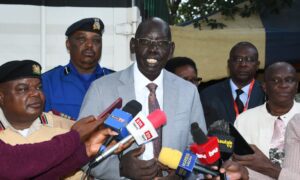
Korir Sing’Oei Provides Update on Kenyan Woman Held in Hoi Chi Minh Prison Amid Drug Trafficking Warnings
In a recent update that has captured the attention of over 109,000 viewers on Twitter, Korir Sing’Oei, the Principal Secretary for Foreign Affairs in Kenya, shared crucial information regarding the status of Margaret Nduta, a Kenyan national currently detained in Hoi Chi Minh Prison, Vietnam. The post, which has garnered significant engagement, including 211 reposts, 41 quotes, and 932 likes, provides a glimmer of hope and a stern warning to Kenyans about the perils of drug and human trafficking.
The Journey to Vietnam
Sing’Oei revealed that a team from Bangkok successfully secured travel visas and made their way to Hoi Chi Minh Prison to assess Nduta’s condition. This development comes after a period of uncertainty and distress for Nduta’s family and supporters. The team confirmed that while Nduta is deeply distressed, she is coping and has been treated humanely by the prison authorities.
Legal Proceedings and Appeal
Margaret Nduta’s case has been fraught with challenges. She was not represented by counsel during her trial, a situation that has raised concerns about the fairness of the judicial process. However, there is a ray of hope as an appeal was filed a few days ago and is expected to be heard soon. The Kenyan government, through its foreign affairs office, continues to engage with Vietnamese counterparts to explore other avenues for resolving this complex and sensitive matter.
A Stern Warning to Kenyans
In his post, Sing’Oei took the opportunity to issue a strong warning to Kenyans, urging them to avoid any form of drug or human trafficking. He emphasized that such activities are not only extremely dangerous but also come with severe legal and personal consequences. The message is clear: the allure of quick financial gain is not worth the risk of ending up in a foreign prison, far from home and loved ones.
The Broader Implications
This case highlights the broader issue of Kenyans getting involved in international drug trafficking networks. The Kenyan government has been increasingly vocal about the dangers of such activities, which often prey on vulnerable individuals. The situation with Nduta serves as a stark reminder of the need for greater awareness and preventive measures to protect citizens from falling victim to these criminal networks.
International Law and Diplomacy
Sing’Oei’s update also underscores the importance of international law and diplomacy in resolving such cases. The involvement of the Kenyan foreign affairs office demonstrates the government’s commitment to protecting its citizens abroad, even in challenging circumstances. The ongoing engagement with Vietnamese authorities is a testament to the delicate balance of diplomacy and the pursuit of justice.
Public Reaction and Support
The public reaction to Sing’Oei’s post has been overwhelmingly supportive, with many Kenyans expressing their solidarity with Nduta and her family. The high level of engagement on social media reflects the community’s concern and the collective hope for a positive resolution to this case. The 33 bookmarks on the post indicate that many are keen to stay updated on any further developments.
Conclusion
As the Kenyan government continues to navigate this complex situation, the case of Margaret Nduta highlight the risks associated with international drug trafficking. Korir Sing’Oei’s update provides not only a status report on Nduta’s condition but also a crucial message to the public about the dangers of such activities. The hope remains that through continued diplomatic efforts and legal proceedings, a resolution can be found that brings Nduta home and prevents others from facing similar fates.
In the meantime, the Kenyan community remains vigilant, hopeful, and united in their support for Margaret Nduta and their commitment to heeding the warnings against the perils of drug and human trafficking.