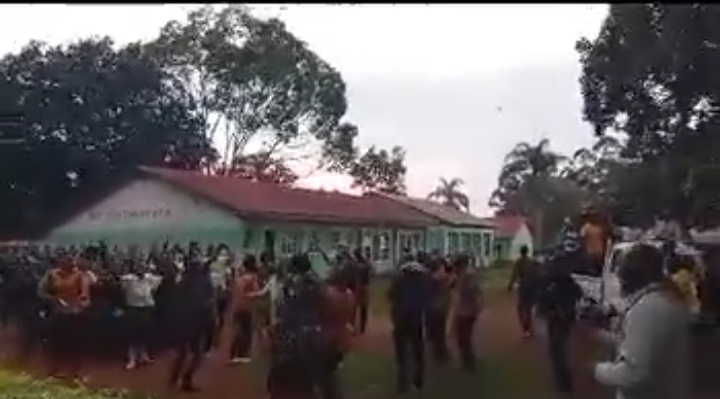
The ongoing strike by the Kenya Union of Post Primary Education Teachers (KUPPET) has reached new heights as students from St. Cecilia Misikhu Girls in Bungoma joined the movement, adding to the national wave of unrest in the education sector. The strike, which began on Monday, has paralyzed learning in institutions across Kenya, with teachers demanding improved working conditions.
Unrest Spreads Nationwide
The decision by students to join the strike is a significant development that highlights the widespread nature of the crisis in Kenya’s education sector. Reports indicate that the strike has caused considerable disruptions, forcing many schools to halt operations indefinitely. Teachers across the country have downed their tools, taking to the streets to voice their frustrations with the current state of working conditions in schools.
At St. Cecilia Misikhu Girls, located in Bungoma County, students demonstrated in solidarity with their teachers, expressing concerns about the deteriorating state of the educational environment. The school, one of the prominent institutions in the area, became a focal point for the strike as both students and teachers rallied for improved conditions and better treatment for educators.
Teachers’ Demands and the Root of the Strike
The strike, which is spearheaded by KUPPET, is primarily focused on demanding improved working conditions for teachers. The union has expressed frustration over what it sees as inadequate pay, poor facilities, and excessive workloads placed on educators. KUPPET leaders have called for urgent reforms, including better wages, reduced class sizes, and the provision of adequate resources for schools.
In addition to improved pay and conditions, teachers are also pushing for the hiring of more staff to alleviate the burden placed on the current workforce. Many teachers have complained about overcrowded classrooms and an overwhelming amount of administrative work, which has left them unable to focus on teaching. These conditions, teachers argue, not only hamper their ability to perform effectively but also negatively impact the quality of education provided to students.
The strike has garnered significant support from teachers across the country, with some schools completely shutting down as a result. Teachers in counties like Bomet have been actively participating in the protests, engaging in physical exercises like press-ups as part of their preparation for an indefinite strike period. Videos capturing teachers performing these exercises have gone viral on social media, symbolizing their readiness to endure a prolonged standoff if their demands are not met.
KUPPET Versus KNUT: A Divided Front
While KUPPET has remained steadfast in its decision to continue with the strike until its demands are addressed, the Kenya National Union of Teachers (KNUT) has taken a different stance. KNUT recently pulled out of the planned strikes after reaching an agreement with the government, stating that most of its demands had been met.
KNUT’s decision to withdraw from the strike has created a rift between the two unions, with some teachers questioning KNUT’s commitment to fighting for their rights. KNUT leaders have defended their position, arguing that the government has shown good faith by addressing key issues such as salary increments and the promotion of teachers. As a result, KNUT has urged its members to return to work, emphasizing that dialogue with the government remains the most effective way to resolve ongoing issues.
The divergence in approaches between KUPPET and KNUT has left many teachers in a state of uncertainty. While some have chosen to heed KNUT’s call and return to work, others remain resolute in their decision to strike, aligning themselves with KUPPET’s demands for further action.
Government Response and Public Reaction
The government’s response to the strike has been mixed, with officials acknowledging the concerns raised by teachers but calling for patience as negotiations continue. Education Cabinet Secretary Ezekiel Machogu has urged teachers to return to the classroom while discussions with the unions progress. He has assured educators that the government is committed to addressing their grievances but stressed that any changes must be implemented in a phased manner due to budgetary constraints.
However, teachers have expressed frustration with the government’s pace of action, accusing officials of dragging their feet on important issues. Many educators believe that the government has failed to prioritize the education sector, resulting in the current crisis. The strike has also drawn attention to the broader challenges facing the education system in Kenya, including underfunding, lack of resources, and inadequate infrastructure in schools.
Public reaction to the strike has been divided, with some parents expressing support for teachers’ demands for better working conditions. Many parents argue that improved conditions for teachers will ultimately benefit students by ensuring a higher quality of education. However, others have voiced concerns about the impact of the strike on their children’s education, particularly as the country approaches crucial examination periods.
The Way Forward
As the strike enters its second week, the standoff between KUPPET and the government shows no signs of abating. The participation of students in the strike has added a new dimension to the unrest, with the potential to further escalate tensions if a resolution is not reached soon. Education stakeholders are urging both the government and the unions to engage in constructive dialogue to find a lasting solution to the crisis.
For now, teachers across Kenya remain resolute in their demands for better working conditions, with many vowing to continue the strike until tangible progress is made. Whether through negotiation or continued protests, the resolution of this strike will have far-reaching implications for the future of education in Kenya.
Conclusion
The ongoing KUPPET strike has exposed deep-seated issues within Kenya’s education system, with teachers, students, and government officials all caught in the crossfire. As the situation continues to unfold, the need for meaningful reforms in the education sector has never been more apparent. The involvement of students in the strike signals the urgency of the situation, and all eyes are now on the government to respond with the decisive action needed to restore normalcy to the country’s schools.
click Here to watch:
https://www.facebook.com/share/p/HvhZrreaDECjLTvH/?mibextid=oFDknk