
Schools preparing candidates for the 2026 KCSE examinations are facing new regulations and strict timelines that could significantly impact registration and project mark submissions.
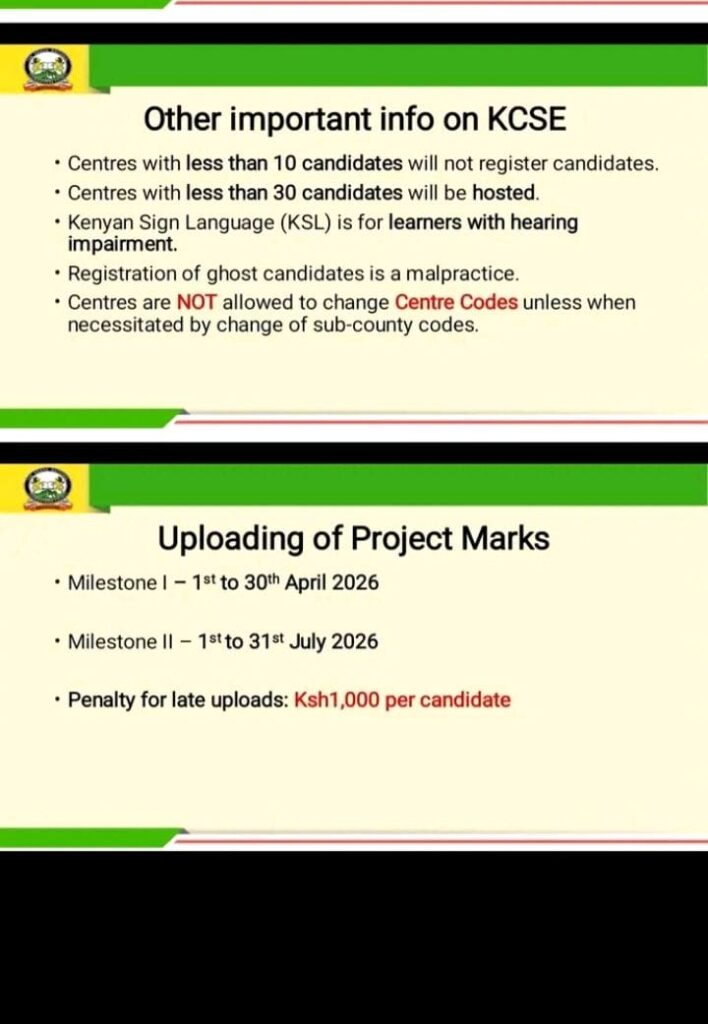
According to the latest updates, examination centres with fewer than 10 candidates will not be allowed to register students. Additionally, centres with less than 30 candidates will not host the exams independently, meaning affected schools must make alternative arrangements for their learners. This move is expected to streamline exam administration but may pose logistical challenges for smaller institutions.
The guidelines also emphasize inclusivity, noting that Kenyan Sign Language (KSL) will be used for learners with hearing impairments. However, authorities have issued a stern warning against malpractice, particularly the registration of “ghost candidates,” which remains strictly prohibited.
Another key directive is that examination centres are not permitted to change their centre codes unless there is an official adjustment due to sub-county code changes. This ensures consistency and accountability in the examination system.
In addition to registration rules, timelines for uploading project marks have been clearly outlined. The first milestone runs from April 1 to April 30, 2026, while the second milestone is scheduled from July 1 to July 31, 2026. Schools are urged to adhere strictly to these deadlines.
Failure to submit marks on time will attract a penalty of Ksh 1,000 per candidate, a measure aimed at enforcing compliance and timely processing.
Education stakeholders are now calling on schools to act early, organize candidates efficiently, and avoid costly penalties as the 2026 KCSE approaches.