EU Parliament Members Express Strong Support for Tanzania’s Pro-Democracy Movement
Brussels, Belgium – In a powerful statement issued on October 31, 2025, a cross-party group of Members of the European Parliament (MEPs) has voiced firm solidarity with the people of Tanzania, who are courageously demanding democracy, justice, and accountability.
The letter, signed by Udo Bullmann, David McAllister, Erik Marquardt, Michael Gahler, Barry Andrews, and Robert Biedroń, reflects growing international concern over Tanzania’s ongoing political unrest following disputed election results. The MEPs emphasized that the international community should refrain from recognizing the contested elections until credible investigations are conducted and democratic standards are upheld.
“Solidarity With the People of Tanzania”
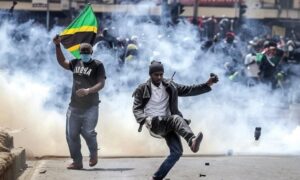
In their statement, the six influential MEPs acknowledged the bravery of Tanzanian citizens who have taken to the streets, describing the demonstrations as a legitimate, broad-based movement for democratic renewal, not acts of chaos or violence.
“We express our deep solidarity with the people of Tanzania who are courageously taking to the streets to demand democracy, justice, and accountability,” the statement reads. “These are not riots or acts of chaos, but a legitimate, broad-based movement for democratic renewal that brings together citizens from all generations and social backgrounds.”
The declaration underscores Europe’s moral and political support for Tanzanian citizens, many of whom have been protesting against what they describe as systemic political suppression, lack of electoral transparency, and misuse of state power.
EU Raises Alarm Over Reports of Violence
The MEPs also expressed grave concern about reports of violence and loss of life in the East African nation, urging authorities and the international community to ensure restraint and accountability.
“We are deeply concerned about reports of violence and loss of life. The international community must refrain from hastily recognising the recent election results until credible investigations have taken place and democratic standards are ensured,” they added.
This marks one of the strongest statements yet from European lawmakers regarding Tanzania’s internal political situation, signaling that Brussels is closely monitoring developments in the country and may push for further international scrutiny if the situation escalates.
Warning Against Military Entrenchment
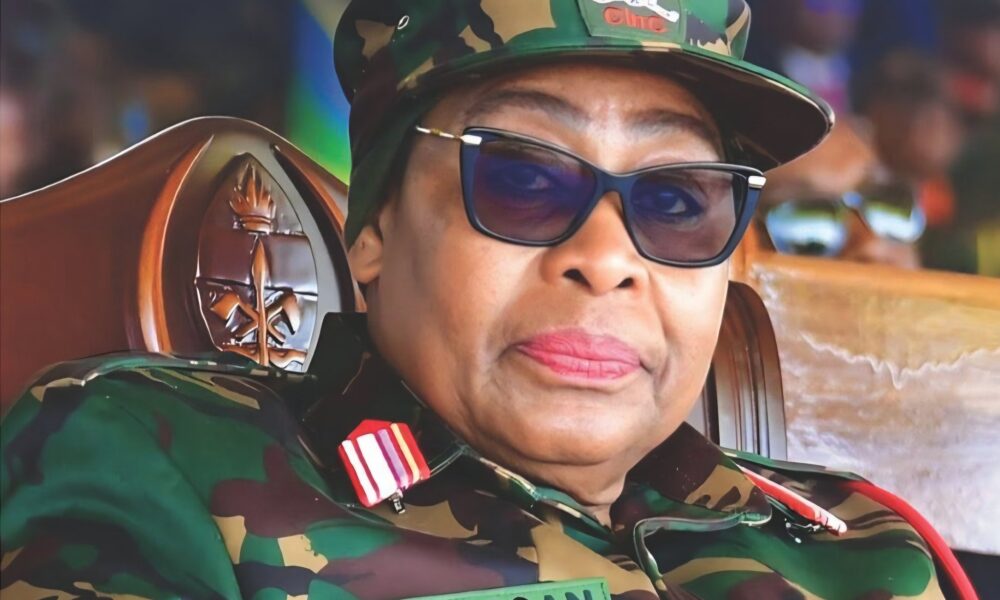
The MEPs further cautioned against any attempt by Tanzania’s military to seize or consolidate power, stressing that the armed forces should play a supportive and transitional role, not a political one.
“If the military assumes a role in this critical moment, it must be strictly limited to facilitating a peaceful and democratic transition, not entrenching power,” the statement reads.
Analysts say this message appears directed at recent reports suggesting that sections of the Tanzanian military have taken a more active role in controlling civilian protests following the controversial elections. The EU lawmakers made it clear that any military interference must serve democracy, not dictatorship.
“The People Deserve Freedom and Dignity”
The statement concluded with a reaffirmation of the European Parliament’s support for democracy, human rights, and freedom of expression in Tanzania and across the region.
“The people of Tanzania deserve freedom, dignity, and a government that reflects their will,” the MEPs said. “We stand with all those peacefully calling for democracy and human rights in Tanzania and across the region.”
This explicit endorsement of the Tanzanian democracy movement by senior European officials could intensify international pressure on the Tanzanian government and military to respect human rights and democratic values.
A Rare Display of Cross-Party Unity in the EU
The joint statement represents a rare instance of cross-party unity among European Parliament members, cutting across ideological lines. The signatories include representatives from multiple major European political groups:
- Barry Andrews (Renew Europe)
- Robert Biedroń (S&D)
- Udo Bullmann (S&D)
- Michael Gahler (EPP)
- David McAllister (EPP)
- Erik Marquardt (Greens/EFA)
Such alignment among centrist, socialist, conservative, and green blocs signals that the European Parliament views the Tanzanian crisis as a serious regional concern that transcends political divisions within Europe.
Growing International Concern Over Tanzania’s Political Climate
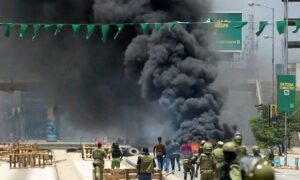
Tanzania has faced increasing scrutiny from international observers following a tense post-election period marked by mass protests, arrests, and alleged human rights violations. Opposition groups and civil society organizations have accused the government of manipulating electoral results and suppressing dissent through intimidation and censorship.
Reports of internet shutdowns, arbitrary detentions, and excessive use of force by security agencies have drawn condemnation from human rights organizations, including Amnesty International and Human Rights Watch.
The European Union, which has long maintained diplomatic ties with Tanzania, has in recent years expressed concerns about shrinking civic space and erosion of democratic institutions in the country. The latest statement adds a new layer of diplomatic pressure amid growing unrest.
Calls for Peaceful Dialogue and Accountability
The MEPs’ statement also implicitly calls for dialogue between the government, opposition, and civil society as a path toward restoring trust and national unity. Observers say that for Tanzania to achieve lasting peace, all sides must commit to credible reforms and respect the rule of law.
Experts believe the EU’s position could influence donor policies, trade relations, and international funding, given Tanzania’s long-standing partnerships with European nations.
“This is not just symbolic. When MEPs from across the spectrum unite like this, it sends a powerful message that Tanzania’s democracy is a shared global concern,” said a Brussels-based analyst on African affairs.
A Test of Tanzania’s Democratic Resilience
The unfolding situation in Tanzania is widely seen as a test of the country’s democratic resilience and a defining moment for its political future. The MEPs’ appeal emphasizes the importance of ensuring that citizens’ voices are heard and respected without fear of violence or retaliation.
Should the Tanzanian government fail to address these concerns, it risks further isolation from international partners, potential sanctions, and a loss of investor confidence in what has traditionally been one of East Africa’s most stable economies.
Conclusion
As protests continue across major Tanzanian cities, the European Parliament’s message is clear: democracy must prevail over power politics. The EU stands with Tanzanians demanding freedom, justice, and accountable leadership.
By urging restraint from both the government and the military, the statement reinforces a global consensus that Africa’s democratic progress depends on respecting human rights, electoral integrity, and the people’s will.
With the eyes of the international community now fixed on Dar es Salaam and Dodoma, Tanzania stands at a historic crossroads — between authoritarian regression and democratic renewal.