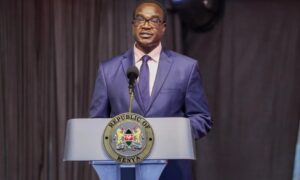
Nairobi Senator and Linda Mwananchi Movement leader Edwin Sifuna has ignited a fierce national debate after accusing President William Ruto’s administration of deliberately concealing multi-billion-shilling project contracts, claiming Kenyans are being “robbed blind.” In a widely shared statement on X that quickly gained traction, Sifuna pledged that his movement would make every major government contract public if given power, grounding the promise in the constitutional values of transparency, accountability, and sustainable development.
“Transparency, Accountability, sustainable development. The #LindaMwananchiMovement promise is to make all project contracts available to the public in conformity with these three Constitutional Values. We all know why the Ruto regime hides these agreements. From Bomas to Talanta to Rironi highway to Lamu refinery, we are being robbed blind,” Sifuna posted, capturing the frustration of many citizens who have long demanded greater openness in public spending.
The statement, which mirrors concerns raised across social media and by civil society, focuses on four high-profile infrastructure projects that have drawn repeated questions over cost escalations, procurement methods, and limited public access to full contractual details. Supporters of the Linda Mwananchi Movement argue these cases illustrate a pattern of opacity that undermines public trust and the principles enshrined in Kenya’s 2010 Constitution, particularly Article 10 on national values and Chapter 12 on public finance.
On the Bomas International Convention Complex, critics point to a significant cost jump. What began as an estimated Sh31.7 billion project has reportedly climbed past Sh45 billion. Posts circulating on X detail claims of questionable additions amounting to around Sh2.5 billion, discrepancies in repayment structures, and the use of Ministry of Defence channels that limited standard civilian oversight. One detailed analysis shared widely noted safety concerns at the site and calls for forensic audits of the variations. Senate committees have previously sought the principal contract documents, which remain under defence-related handling rather than the ministry that owns the project.
Talanta Sports City, the ambitious 60,000-seater stadium project, has faced similar scrutiny. Originally approved at around Sh35 billion by the National Treasury, the contract value is said to have risen to approximately Sh45.8 billion. The Auditor-General reportedly flagged an unsupported price variation of more than Sh10 billion lacking full documentation. Critics on X highlight the use of direct procurement methods that bypassed certain mandatory clearances for large contracts, and later classification of the area in ways that restricted public and media access. Ordinary Kenyans have expressed mixed feelings—pride in the facility’s potential alongside anger over the unexplained cost increases.
The Rironi–Nakuru–Mau Summit Highway (part of the A8 corridor) stands out for its long-term financial implications. Described as a multi-billion-shilling Design-Build-Finance-Operate-Maintain-Transfer concession lasting up to 30 years, the project has raised alarms over potential taxpayer liabilities. Treasury-linked figures shared in public discussions suggest that terminating or restructuring the opaque toll arrangements could expose the public to compensation claims approaching Sh180 billion. Exact toll-rate escalation formulas and private partner terms have not been fully laid open for scrutiny, leaving motorists and taxpayers uncertain about decades of future costs.
The proposed Lamu oil refinery, linked to major private investment discussions including Dangote interests, involves large land allocations—reports mention thousands of acres—and potential state commitments valued in the tens of billions of shillings. Activists and consumer groups have challenged aspects of land transfers, seed funding, and tax incentives, arguing that attempts to classify the deal strictly as private commercial activity have shielded it from full Public Private Partnership Act disclosure requirements. Sifuna and others insist the public has a right to know any hidden guarantees or equity stakes entered without clear parliamentary approval.
Reactions across X have been intense. One widely viewed post outlined a broader constitutional agenda for the Linda Mwananchi Movement, listing demands to restore the rule of law, guarantee equal opportunities, make public expenditure fully transparent, demand accountability for national projects, manage public debt responsibly, protect resources through independent oversight, and ensure equitable development nationwide. “Kenyans deserve transparency on the costs, contractual arrangements, financing and expected public benefits of major projects,” the post stated, naming the same four initiatives.
Other voices amplified the call. Commentators noted that successive administrations have faced similar criticism over secrecy, yet the current scale of the projects and the persistent refusal to publish complete documents have heightened the stakes. Some users demanded that Ruto produce the Talanta and Lamu contracts as a condition for campaigning in certain regions. Others pointed to earlier opposition demands—such as those once made for the Standard Gauge Railway contract—to highlight what they see as inconsistency when roles reverse.
Government defenders have pushed back in replies and parallel discussions, arguing that many projects are progressing, that commercial confidentiality sometimes applies, and that formal channels exist for information requests. Sifuna has countered that gatekeepers in Parliament have blocked efforts to bring the documents to the floor, making public pressure and a change in administration necessary.
The debate arrives at a politically charged moment as Kenya heads toward the 2027 elections. The Linda Mwananchi Movement, positioning itself around constitutional fidelity and ordinary citizens’ interests, has turned transparency into a central campaign plank. Whether the contracts are eventually released, subjected to independent forensic audits, or remain contested will likely shape public confidence in how mega-projects are conceived, awarded, and delivered.
For now, Sifuna’s blunt accusation has crystallised a growing demand: Kenyans want to see the fine print on the deals that shape their roads, stadiums, convention centres, and industrial ambitions. In a country where public resources are finite and debt sustainability is a constant concern, the call for sunlight on contracts is more than political rhetoric—it is a test of whether constitutional values of transparency and accountability will finally prevail over secrecy. The coming months will reveal if that sunlight arrives or remains blocked.