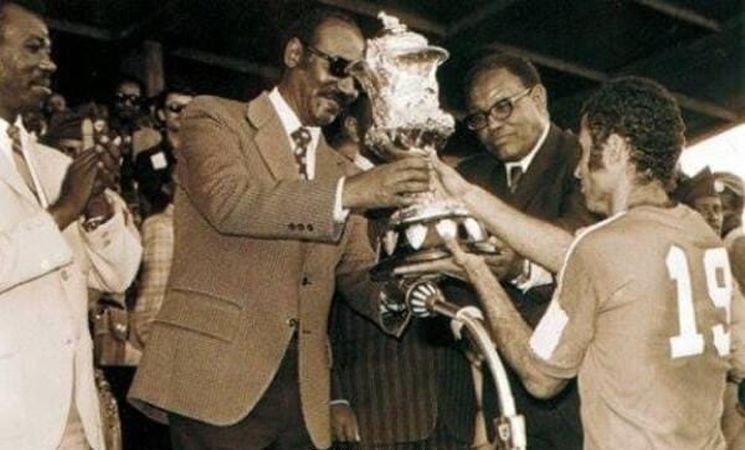
The Africa Cup of Nations is once again at the center of controversy—this time reaching back nearly 50 years. Guinea has made a dramatic and highly contentious demand: strip Morocco of their historic 1976 AFCON title and award it to them instead.
This unexpected move has reignited debate over one of African football’s oldest and most disputed matches, raising serious questions about fairness, consistency, and whether football history can ever truly be rewritten.
A Historic Tournament Back in Focus
The 1976 edition of the Africa Cup of Nations remains unique in the competition’s history. Instead of a traditional knockout final, the winner was determined through a final round-robin group featuring the last four teams.
entered the decisive match against knowing that a draw would be enough to secure the title. Guinea, on the other hand, needed a victory to claim the championship.
The match ultimately ended 1-1, allowing Morocco to finish top of the standings with five points—just one ahead of Guinea—and secure their first AFCON title.
However, the circumstances surrounding that result have now come under fresh scrutiny.
What Happened During the Match?
Guinea took control early in the match, going ahead in the 33rd minute through . At that point, they were on course to win the tournament.
The turning point came in the second half when Moroccan defender was shown a red card by referee following a controversial foul on .
The decision sparked immediate outrage among Moroccan players.
According to reports and Guinea’s recent complaint, Morocco’s players left the pitch in protest and remained off the field for approximately 15 minutes while discussions took place between officials.
Eventually, the match resumed with Morocco reduced to ten men.
Despite the setback, Morocco found a dramatic equalizer in the 86th minute when scored a stunning long-range goal.
That goal secured the draw Morocco needed to win the tournament.
Guinea’s Explosive Claim
Nearly five decades later, Guinea is now challenging that result.
The Guinean football authorities argue that Morocco’s temporary walkout should have resulted in disciplinary action—potentially even forfeiture of the match.
Their demand is clear and bold:
Morocco should be stripped of the 1976 AFCON title, and the trophy should be awarded to Guinea instead.
Guinea’s argument is rooted in principles of sporting integrity, insisting that leaving the pitch during an official match constitutes a violation serious enough to invalidate the result.
Why the Issue Has Resurfaced Now
This controversy has been reignited by a recent CAF ruling that has sent shockwaves across African football.
In a modern case, CAF awarded a 3-0 victory to Morocco after walked off the pitch during a major match in protest of refereeing decisions.
That ruling has set a precedent—one that Guinea now believes should be applied retrospectively.
Their argument is based on consistency:
If modern teams are punished for leaving the pitch, why should similar actions in the past be ignored?
The Legal Debate: Can Rules Be Applied Retroactively?
Despite the emotional weight of Guinea’s claim, sports legal experts widely agree that the case faces major obstacles.
Rules Were Different in 1976
CAF’s current disciplinary regulations, often cited in modern rulings, were not in place at the time of the 1976 tournament.
Applying these rules retroactively would go against standard legal principles in sports governance.
Match Officials Allowed Play to Continue
At the time, the referee permitted the match to resume and reach its conclusion. The result—1-1—was officially recorded and accepted.
Under traditional football rules, the referee’s authority is final regarding match events.
Nature of the Walkout Is Debated
Another key issue is whether Morocco’s actions constituted a full walkout or merely a temporary protest that delayed the game.
This distinction could significantly impact how the incident is interpreted.
CAF Yet to Respond
So far, has not issued an official statement regarding Guinea’s request.
The governing body now finds itself in a difficult position.
On one hand, it must maintain consistency in its disciplinary standards. On the other, it must protect the integrity of historical records and avoid opening the door to endless disputes over past tournaments.
A Growing Crisis of Confidence
This situation highlights a broader issue within African football: increasing scrutiny of governance and decision-making.
Recent rulings have already sparked debate among fans, analysts, and former players. The idea that results can be overturned long after matches are played has unsettled many within the football community.
Guinea’s claim takes that concern even further—into the realm of historical revision.
If accepted, it could set a precedent where decades-old matches are reexamined under modern rules.
What Could Happen Next?
There are several possible outcomes as this situation unfolds:
1. CAF Rejects the Claim
This is widely seen as the most likely scenario. CAF could argue that the rules cited by Guinea did not exist in 1976 and therefore cannot be applied.
2. Symbolic Review
CAF may choose to review the case for historical interest but stop short of changing the official result.
3. A Shocking Decision
Though highly unlikely, agreeing with Guinea would create one of the most controversial moments in football history.
Conclusion: When the Past Meets the Present
Guinea’s demand has reopened one of African football’s most controversial chapters.
While the likelihood of Morocco losing their 1976 title remains low, the debate it has sparked is significant.
It raises fundamental questions about fairness, consistency, and the limits of justice in sport.
For now, remains the official 1976 AFCON champion.
But as this story continues to develop, it serves as a reminder that in football, even history can become the subject of fierce debate.