
In a dramatic show of maritime power and sanctions enforcement, the United States has seized two so-called “ghost fleet” oil tankers in coordinated pre-dawn operations spanning the North Atlantic Ocean and the Caribbean Sea. The seizures follow a weeks-long pursuit that involved extreme weather, evasive maneuvers, and alleged attempts to disguise a vessel’s identity while fleeing U.S. authorities.
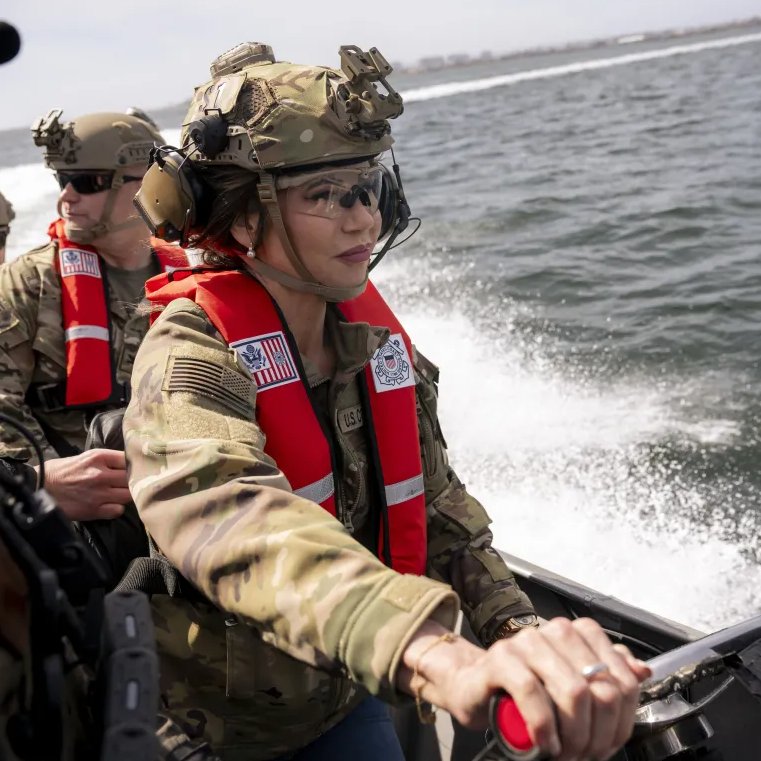
The operation was confirmed by Homeland Security Secretary Kristi Noem, who praised the U.S. Coast Guard for carrying out what she described as “meticulously coordinated” boardings of the Motor Tanker Bella I and the Motor Tanker Sophia. Both ships were either last docked in Venezuela or en route there, placing them at the center of U.S. concerns over sanctions evasion and illicit oil trafficking.
According to U.S. officials, the two tankers are part of a shadowy network commonly referred to as a “ghost fleet” — vessels that allegedly operate under false identities, manipulate tracking systems, and frequently change flags to avoid detection while transporting sanctioned oil.
A Weeks-Long High-Seas Chase
The most dramatic element of the operation involved the Motor Tanker Bella I, a vessel that authorities say actively attempted to evade capture for weeks. U.S. officials revealed that the tanker ignored lawful orders to stop, altered its course multiple times, and took extraordinary steps to conceal its identity.
In a desperate bid to escape enforcement, the ship allegedly changed its flag, repainted its hull, and even altered the vessel’s name while being pursued across international waters. These actions, officials say, are hallmarks of “ghost fleet” behavior designed to confuse authorities and exploit loopholes in maritime regulation.
Despite the tanker’s attempts to disappear, the U.S. Coast Guard cutter USCGC Munro maintained persistent surveillance, tracking the vessel across thousands of miles of open ocean and through severe weather conditions.
Secretary Noem described the pursuit as a testament to the determination of U.S. forces, praising the Coast Guard crew for their endurance and vigilance.
“The heroic crew of the USCGC Munro pursued this vessel across the high seas and through treacherous storms,” Noem said. “They kept diligent watch, protecting our country with the determination and patriotism that make Americans proud.”
The Bella I was ultimately boarded and seized in the North Atlantic, marking the end of one of the most high-profile maritime pursuits in recent years.
Second Seizure Near the Caribbean
While the Bella I seizure captured headlines, it was not the only operation underway. In a separate but closely coordinated mission, U.S. forces boarded and seized the Motor Tanker Sophia in international waters near the Caribbean.
Unlike Bella I, the Sophia was described as a stateless vessel, meaning it was not lawfully registered under any recognized national flag. Under international maritime law, stateless ships are especially vulnerable to boarding and seizure, as they lack legal protections normally afforded to flagged vessels.
U.S. officials allege that the Sophia was also engaged in illicit maritime activity, likely linked to the transportation of sanctioned oil or participation in sanctions-evasion networks. The vessel was boarded without resistance and is now under U.S. control, being escorted for further legal proceedings.
What Is a “Ghost Fleet”?
The term “ghost fleet” has increasingly been used by Western governments to describe a growing number of tankers involved in covert oil transportation. These ships are often accused of:
- Turning off or manipulating tracking systems
- Changing vessel names and flags frequently
- Operating through shell companies
- Transferring oil ship-to-ship in remote waters
- Transporting crude linked to sanctioned states
U.S. authorities believe these fleets play a critical role in helping sanctioned countries move oil to global markets while bypassing restrictions intended to limit revenue.
A Strong Message on Sanctions Enforcement
The twin seizures send a clear signal that the United States is escalating enforcement efforts beyond financial penalties and paperwork, extending them directly onto the world’s oceans.
By intercepting vessels in international waters, U.S. authorities are demonstrating a willingness to pursue suspected sanctions violators far from American shores. Analysts say the operation reflects growing concern that traditional enforcement tools are no longer sufficient to deter sophisticated maritime evasion tactics.
The case of Bella I, in particular, highlights how far operators may go to avoid capture — even attempting to physically alter a vessel’s identity while underway.
International Fallout and Rising Tensions
The seizures have not gone unnoticed on the global stage. Russia has strongly criticized the interception of the Russian-flagged tanker, arguing that the action violates principles of freedom of navigation and international law. U.S. officials, however, maintain that the seizure was lawful and justified based on sanctions enforcement authority and maritime regulations.
The incident adds another layer of tension to already strained relations between Washington and Moscow, especially amid broader disputes over energy markets, sanctions, and global security.
Venezuela, whose oil industry has long been under heavy U.S. sanctions, is also expected to protest the actions, though American officials say the operations were necessary to disrupt illegal trade networks.
What Happens Next?
Both vessels are now under U.S. control and expected to face legal adjudication. Potential outcomes include asset forfeiture, criminal charges, or further investigations into the companies and individuals connected to the tankers.
Experts believe this may be only the beginning of a broader campaign targeting ghost fleets worldwide. If successful, such efforts could reshape how sanctions are enforced and significantly disrupt illicit oil flows.
For now, one thing is clear: the high-seas chase and seizure of two ghost fleet tankers marks a bold and unprecedented move, signaling that the United States is prepared to pursue sanctions enforcement wherever it leads — even into the heart of the world’s oceans.





















