Tanzania was plunged into tension and uncertainty on Wednesday after police announced a nationwide curfew beginning at 6 p.m. East Africa Time (EAT) on election day. The move came as opposition supporters staged widespread protests across multiple regions, vowing to continue their demonstrations despite the heavy police presence and government warnings.
Authorities said the curfew was meant to restore calm after reports of violence, clashes with law enforcement, and unrest in several towns — including the commercial capital, Dar es Salaam. However, opposition supporters and rights groups see the curfew as another attempt to suppress public dissent during a highly contested vote.
What Happened: A Nation on Edge
On election day, Tanzanian police moved swiftly to impose a nationwide curfew from 6 p.m., citing escalating violence. The decision followed reports of protesters blocking streets, clashing with security forces, and damaging property in parts of Dar es Salaam and other regions.
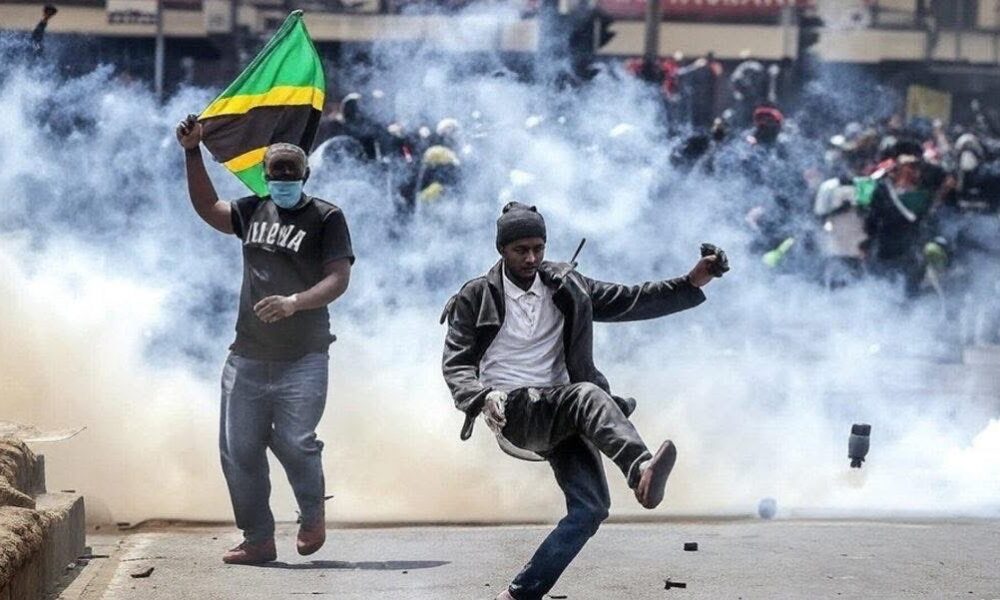
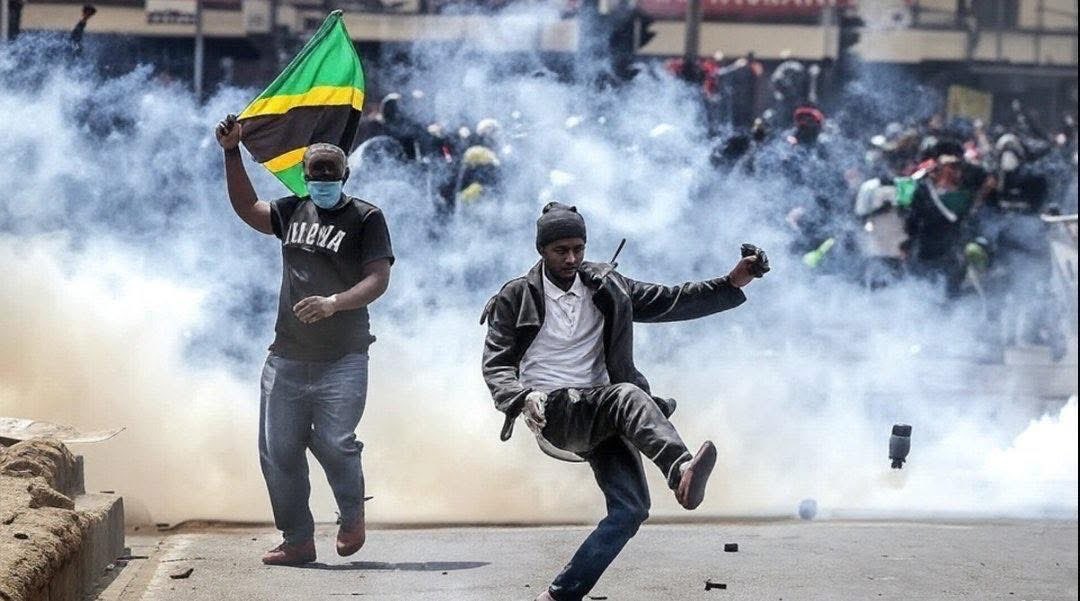
Witnesses described chaotic scenes in the city, with tear gas filling the air as police tried to disperse large groups of demonstrators. At least one petrol station was reportedly set ablaze amid running battles between protesters and security personnel.
The timing of the protests was not coincidental — it came amid one of Tanzania’s most contentious elections in recent years. Opposition parties had accused the government of intimidation, unlawful detentions, and disqualifying major challengers from the race. These tensions erupted into street confrontations, forcing the government to declare what officials called a “temporary safety measure” to protect citizens.
Rights organizations had warned for weeks that Tanzania’s political climate was dangerously polarized, pointing to a pattern of harassment and restrictions on opposition activity. Many activists claimed the curfew was a pre-planned measure to stifle dissent rather than a response to spontaneous violence.
Why the Curfew Matters
The curfew effectively halted movement across the country, forcing millions of citizens indoors by evening. Authorities said the measure would help prevent further violence, but critics say it undermined democratic transparency and silenced peaceful protests.
By restricting movement at 6 p.m., the curfew impacted voters still trying to cast ballots or observe counting at polling stations. Election monitors and journalists reported being ordered to leave polling centers early, raising concerns about vote integrity and transparency.
Several opposition groups released joint statements condemning the curfew as unconstitutional, arguing that it was designed to prevent citizens from holding the government accountable.
Human rights advocates also expressed concern that the curfew created opportunities for arbitrary arrests and nighttime raids. Local media outlets reported multiple detentions of young people suspected of organizing protests.
Flashpoints of Unrest
The epicenter of the protests was Dar es Salaam, Tanzania’s most populous city. Demonstrations erupted in key neighborhoods, including Kariakoo, Temeke, and Kinondoni. Police responded with force, deploying water cannons and using tear gas to break up crowds.
Outside Dar es Salaam, smaller protests were reported in Mwanza, Arusha, and Mbeya. Protesters in these regions demanded fair elections and the release of detained opposition leaders.
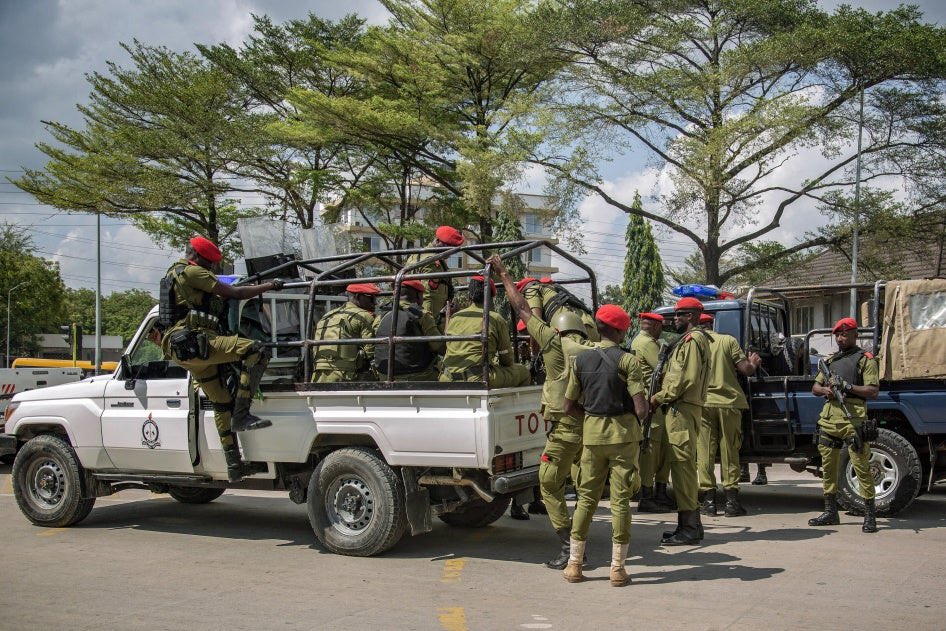
In Dodoma, the nation’s administrative capital, heavy police patrols were stationed around government buildings, with officers blocking roads leading to Parliament and key ministries.
Social media videos showed groups of protesters waving national flags and chanting slogans demanding political reform. In some areas, clashes broke out between rival supporters, further heightening the chaos.
Border Drama at Namanga
Adding to the tension, reports emerged that hundreds of Kenyans attempted to cross into Tanzania through the Namanga border to show solidarity with protesters. Tanzanian police reportedly blocked the crossings, citing national security concerns.
Namanga, located along the Kenya–Tanzania border, has long been a hotspot for cross-border trade and regional interaction. The attempt by Kenyans to join demonstrations underscored the shared political and social ties between the two countries.
While some social media posts claimed that several Kenyan activists were detained, these reports have not been independently verified. Nonetheless, authorities tightened security along the border, halting both pedestrian and vehicle traffic for several hours.
Kenyan border officials were also said to have increased patrols on their side to prevent potential escalation. The Kenyan government has not officially commented on the reports, though sources suggest diplomatic communication has been initiated to prevent further tensions.
Government and Police Response
Police spokesperson David Misime confirmed that the curfew would remain in effect “until further notice.” He said the measure was necessary to protect lives and property amid the violent protests.
“The government will not allow chaos to disrupt peace and democracy in our country,” Misime said during a televised briefing. “We urge all citizens to remain indoors and cooperate with security agencies.”
However, opposition leaders dismissed the statement, accusing the police of acting under direct orders from the ruling party. They claimed that the curfew was intended to silence voices critical of President Samia Suluhu’s administration.
Independent analysts said the police response appeared to be part of a broader strategy to control the narrative and prevent live coverage of the protests from spreading internationally.
Human Rights Concerns
Rights organizations swiftly condemned the curfew, saying it violated constitutional freedoms of movement and assembly. Amnesty International described the move as “a troubling sign of shrinking democratic space in Tanzania.”
Local human rights defenders reported that several activists were arrested in the days leading up to the election. Opposition campaign offices were raided, and gatherings were dispersed under the pretext of enforcing public order.
Observers from regional blocs also expressed concern over limited access to polling stations and reports of harassment of opposition agents. Some international journalists reported being barred from entering certain districts or having their equipment confiscated.
The Tanzania Human Rights Defenders Coalition urged the government to lift the curfew and open dialogue with the opposition. “Suppressing dissent will not restore peace; it only deepens mistrust,” the organization said in a public statement.
Regional Implications
The unrest has drawn the attention of neighboring countries, particularly Kenya, which shares deep trade and cultural ties with Tanzania. Analysts warn that prolonged instability could disrupt commerce, especially at major border points such as Namanga, Holili, and Taveta.
Truck drivers reported long delays as security checks intensified. Businesses that rely on cross-border trade expressed concern over potential losses if the curfew and border restrictions persist.
Diplomatic observers also suggested that Nairobi may face pressure to issue an official response if reports of Kenyan involvement in the protests are confirmed.
The East African Community (EAC) is expected to monitor the situation closely, as political instability in any member state poses economic and security risks for the entire bloc.
Voices from the Ground
Residents of Dar es Salaam described the situation as “tense but resilient.” Many said they were caught off guard by the sudden curfew and struggled to get home before 6 p.m.
“I was in traffic when the announcement came. People were rushing home in panic,” said one resident. “The roads were full, and police were already starting to clear the streets.”
Others expressed frustration at what they described as “excessive police force.” Videos shared online showed officers firing tear gas near crowded neighborhoods.
Despite warnings, protesters vowed to return to the streets once the curfew is lifted. “We will not be silenced,” said one protester in a recorded message circulated on social media. “We want justice, we want fair elections.”
What Lies Ahead
As night fell, Tanzania’s streets fell quiet under heavy police surveillance. The nation now stands at a crossroads — between a government determined to assert control and a populace demanding political freedom.
The coming days will determine whether the curfew eases tensions or sparks more defiance. Much will depend on how the government manages post-election grievances and whether opposition leaders are allowed to operate freely.
Observers warn that if the curfew is prolonged or enforced harshly, it could reignite protests and deepen political divides.
For now, Tanzania remains under lockdown, its citizens waiting anxiously for signs of stability — and clarity — in a nation that has long prided itself on peace and unity.
Summary
Tanzania’s nationwide curfew, imposed at 6 p.m. amid widespread election protests, marks one of the most significant political crises in recent years. The measure has drawn condemnation from human rights groups, concern from neighboring Kenya, and defiance from opposition supporters.
As security forces patrol the streets and communication channels remain tightly controlled, the world is watching to see how the Tanzanian government will balance stability with democratic accountability.