Mystery Surrounds Death of Albert Omondi Ojwang as Pressure Mounts on Police and IPOA
The recent death of Albert Omondi Ojwang, a Kenyan citizen arrested over alleged false publication, has sparked national outrage and demands for accountability, as disturbing footage and social media testimonies paint a chilling picture of his final hours in police custody.
Ojwang was arrested on Friday, 6th June 2025, by detectives from the Directorate of Criminal Investigations (DCI) in Homa Bay County. According to a statement released by the Office of the Inspector General, Ojwang was then transported to Nairobi for further interrogation by DCI officers based at their headquarters. He was subsequently booked at the Central Police Station on the same evening under Occurrence Book (OB) Number 136/7/6/2025 at 2135 hours.
However, less than four hours after being placed in a cell, Ojwang was found unconscious during a routine inspection. He was immediately rushed to Mbagathi Hospital for emergency treatment, where he was pronounced dead upon arrival, as documented in OB Number 09/08/06/2025 at 0139 hours.
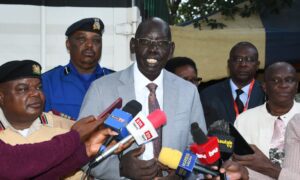
The National Police Service (NPS), through Inspector General Douglas Kanja Kirocho, acknowledged Ojwang’s death in custody and confirmed that the Independent Policing Oversight Authority (IPOA) had been notified to commence investigations, in line with statutory requirements governing custodial deaths.
Public Outcry and Scenes at City Mortuary
News of Ojwang’s death spread rapidly online, leading to widespread grief and anger. Heart-wrenching videos circulated on social media platforms showing crowds of mourning Kenyans gathered outside City Mortuary, where Ojwang’s body was taken. In one particularly emotional clip, members of the public are seen singing the Kenyan National Anthem in unison, surrounding the lifeless body draped in a white cloth. The gesture has been interpreted by many as a call for justice and a symbolic reclaiming of national dignity in the face of state-linked tragedy.
On X (formerly Twitter), Homabay Township MP Peter Kaluma voiced the growing frustration among citizens, posting:
“Never mistake the silence of the wounded for inaction. We want to know. We must know what happened to Albert Ojwang.”
His message echoed sentiments shared by hundreds of users across various platforms, demanding a transparent and conclusive investigation into the incident.
Government Pathologist Recuses Himself
The tension around the case deepened further after government pathologist Dr. Johansen Oduor declined to participate in the postmortem examination of Ojwang’s body. In a public communication, Dr. Oduor cited a conflict of interest, stating that he had familial ties to the deceased. This revelation has left the family and the public in limbo, uncertain about the next steps in determining the official cause of death.
The absence of a postmortem report has only added to the mounting speculation, with civil society actors and human rights advocates urging authorities to ensure that a neutral and internationally credible pathologist be appointed to conduct the examination.
Police Officers Interdicted as IPOA Steps In
To address the growing scrutiny, Inspector General Kanja announced the immediate interdiction of several police officers stationed at the Central Police Station on the night of Ojwang’s death. These include:
- The Officer Commanding Station (OCS);
- The Duty Officer on duty that night;
- The Cell Sentry on duty at the time;
- All officers who were present at the Report Office;
- Any other officer found to have been on duty or involved in the incident.
The decision, according to Kanja, aims to ensure a “thorough, impartial, and expeditious investigation” led by the Independent Policing Oversight Authority (IPOA).
“We remain committed to upholding the rule of law, human rights, transparency, and accountability within the Service,” stated the Inspector General, promising full cooperation with independent agencies.
Unanswered Questions: Was There Foul Play?
Despite the formalities and procedural steps now underway, many Kenyans remain unconvinced. Speculation is rife over whether Ojwang may have been subjected to mistreatment or torture during interrogation. Activists have pointed to previous cases where suspects died under unclear circumstances while in police custody, often without justice or prosecution of culpable officers.
Ojwang’s arrest over alleged false publication has further complicated matters. At a time when press freedom and online expression remain contentious in Kenya, critics argue that the offense of “false publication” is increasingly being used to silence dissent, bloggers, and whistleblowers.
There is also unease over the swiftness with which Ojwang deteriorated in custody. Eyewitnesses and family members claim he was in good health at the time of his arrest. The lack of CCTV footage from inside the cells and the absence of third-party observers during his detainment have cast a long shadow over the official narrative.
Calls for Civilian Oversight and Justice
Leading civil rights organizations have called for broader oversight of police practices and custodial conditions. Amnesty International Kenya issued a brief statement on social media urging IPOA and the Kenya National Commission on Human Rights (KNCHR) to launch parallel inquiries into the incident. Human rights lawyer Yvonne Odhiambo emphasized the urgency of prosecuting officers implicated in cases of custodial deaths, saying:
“This is not just about Albert Ojwang. This is about every Kenyan who believes in a just and safe society. Silence and delay breed impunity.”
A Family in Mourning and a Nation on Edge
For Ojwang’s family, the pain is immeasurable. Their son and brother died in police custody under circumstances still shrouded in mystery. They have called for peace as they await results from IPOA’s investigation but made clear they will not rest until justice is served.
The National Police Service issued a statement of condolence, saying:
“The National Police Service condoles with the family, friends, and relatives of the late Albert Omondi Ojwang and asks for their patience as we get to the bottom of this matter.”
Still, many Kenyans feel that expressions of condolence are not enough. What they seek is justice—swift, fair, and devoid of institutional cover-ups.
The Bigger Picture: Policing in Kenya Under the Microscope
Ojwang’s case is now the latest in a long list of controversies involving deaths in police custody in Kenya. A 2023 report by IPOA showed that at least 119 people died in police custody or due to police action that year alone. While some investigations led to recommendations for prosecution, critics argue that the justice system remains slow and often reluctant to pursue officers implicated in human rights violations.
The recent establishment of the National Coroner’s Service, mandated to investigate unnatural deaths, has been hailed as a step in the right direction. However, until it is fully operational and resourced, cases like that of Albert Ojwang may continue to fall through the cracks.
Conclusion
Albert Omondi Ojwang’s death has ignited a firestorm of grief, anger, and calls for reform in Kenya’s policing and justice system. While the interdiction of officers and initiation of investigations are welcome developments, the public will be watching closely to see if justice is done—or deferred once again.
As the nation mourns, one message resounds from the voices at City Mortuary, from lawmakers to ordinary citizens:
“We want to know. We must know what happened to Albert Ojwang.”