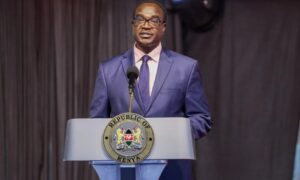
In the midst of Kenya’s ongoing educational crisis, Nandi Senator Samson Cherargei has emerged as a staunch defender of teachers protesting against the Teachers Service Commission (TSC). The senator’s vocal stance on social media and public platforms underscores the intensity of the struggle between educators and their employer, raising vital questions about labor rights, job security, and the future of Kenya’s educational system.
Cherargei’s Critique of TSC
Senator Cherargei did not mince words when he criticized the TSC for its alleged mistreatment of teachers. He particularly took issue with the commission’s handling of teachers who are participating in recent strikes, which had been widely publicized across the country. His demands were clear: TSC must engage in honest dialogue with the teachers, crafting a return-to-work formula that acknowledges the validity of their grievances.
The senator’s remarks reflect a growing frustration with the TSC’s approach, particularly regarding its insistence that teachers justify their absence during the strike. “Asking teachers to write show-cause letters is an affront to their rights,” Cherargei remarked, referring to the letters that TSC has sent out to over 10,000 teachers since May 2024(ODRIMedia,Citizen Digital).
The show-cause letters, which required teachers to explain their absence from duty, have been met with widespread disdain. Out of the thousands who received these letters, 742 Junior Secondary School (JSS) intern teachers were terminated due to what the TSC deemed as “professional misconduct” for failing to respond satisfactorily to the commission’s demands(Citizen Digital,The Star).
Legal Protection and Section 41 of the Constitution
Cherargei has emphasized that the teachers’ right to strike is protected under Section 41 of the Kenyan Constitution, which safeguards employees from unfair treatment during lawful industrial action. The senator’s insistence on the constitutional basis for the teachers’ actions has raised the stakes in this dispute, placing the spotlight squarely on the TSC’s handling of the situation.
According to Cherargei, any punitive measures taken by the TSC against teachers could result in legal action. “I dare the TSC to victimize any teacher,” Cherargei stated firmly, warning that any attempts at reprisal would be met with fierce resistance in both the courts and the halls of Parliament(ODRIMedia). His comments suggest that this battle is far from over, as the senator and other supporters of the teachers’ cause prepare to hold the TSC accountable for its actions.
The Broader Context: A Struggling Education Sector
The ongoing dispute between teachers and the TSC is symptomatic of deeper challenges within Kenya’s education sector. The strikes that have rocked the country since April 2024 were born out of frustrations with working conditions, insufficient pay, and job insecurity—issues that continue to plague the teaching profession.
A key point of contention has been the status of intern teachers. Many of these educators, who work under temporary contracts, have found themselves in precarious positions, particularly during times of labor unrest. The sacking of 742 JSS intern teachers in June 2024, following a nationwide strike, highlighted the vulnerability of these professionals(Citizen Digital,The Star). Despite the teachers’ participation in what they believed was a lawful strike, the TSC moved to terminate their contracts, citing a failure to provide satisfactory explanations for their absence during the protests.
The Teachers Service Commission’s actions have not only angered individual educators but also sparked outrage among unions and political leaders. The Kenya Union of Post-Primary Education Teachers (KUPPET), for example, has threatened to take legal action against the TSC for what it describes as unfair dismissal practices(The Star). KUPPET argues that the commission did not follow due process in its termination of the intern teachers, contravening principles of natural justice by failing to give them a fair hearing(Citizen Digital).
Government Intervention and Cherargei’s Demand for Accountability
The gravity of the situation has prompted calls for government intervention. Senator Cherargei has pledged to bring the issue before Parliament, vowing to summon TSC officials, including CEO Nancy Macharia, to explain their actions. This move is seen as a last resort in what has been a protracted and heated dispute between educators and their employer.
Cherargei’s insistence on summoning TSC officials to Parliament is indicative of his broader effort to ensure that justice is served. “We want TSC to swallow its pride,” he said, urging the commission to engage in constructive dialogue with the teachers rather than resorting to punitive measures(ODRIMedia). He further criticized the commission for failing to adhere to the spirit of negotiations that had taken place between TSC, KUPPET, and other stakeholders earlier this year.
Despite the release of Ksh 18 billion by the government for the employment of intern teachers, Cherargei pointed out that this funding has not resolved the deeper issues facing the education sector. The senator’s comments suggest that without a serious commitment to addressing the systemic problems within the sector, the cycle of strikes, dismissals, and unrest is likely to continue(Citizen Digital).
The Way Forward
As the conflict between teachers and the TSC continues to unfold, the stakes are high for both sides. For the TSC, the challenge lies in restoring trust and finding a way to balance the needs of the education system with the rights of its employees. For teachers, the ongoing struggle is about more than just job security—it is about their dignity, rights, and future in the profession.
Senator Cherargei’s impassioned defense of the teachers reflects a broader movement in Kenya toward ensuring that labor rights are respected across all sectors. His call for accountability and his willingness to take the fight to Parliament signal that the battle for fair treatment in the education sector is far from over.
Ultimately, the resolution of this crisis will require a concerted effort from all parties involved—teachers, unions, the TSC, and the government. As the situation continues to evolve, it remains to be seen whether the TSC will heed Cherargei’s warning and take the necessary steps to ensure that Kenya’s educators are treated with the respect and fairness they deserve.