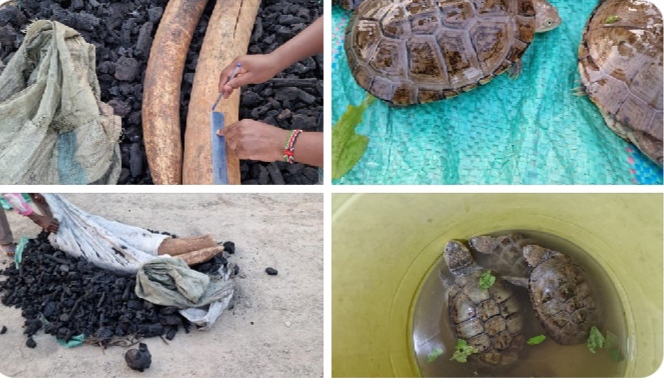
In a significant breakthrough in the fight against wildlife trafficking, six suspected traffickers were arrested following a coordinated multi-agency operation. The operation, which involved officers from the Directorate of Criminal Investigations (DCI) headquarters, the Serious Crimes Unit, rangers from the Kenya Wildlife Service (KWS) headquarters, and Kaloleni DCI officers, led to the seizure of two elephant tusks valued at an estimated street price of Sh5 million and four live terrapins.
The suspects, identified as Makutano Kadenge Katana, William Manyaso Ngala, Suleiman Madengo Saha, Kazungu Samuel Kenga, Omar Nyae Kirongo, and Rashid Kombo Mazua, were apprehended at Kaloleni Shopping Center. This operation was initiated following a tip-off from vigilant citizens who reported suspicious activities in the area, highlighting the critical role of community involvement in combating wildlife crimes.
The six individuals are scheduled to be arraigned on Monday after being held at the Mariakani Police Station. They will be transferred to Nairobi for further processing and court proceedings. This arrest is a significant step in curbing the illegal trade that threatens Kenya’s rich biodiversity.
The operation’s success underscores the importance of multi-agency cooperation and the power of community vigilance. The collaborative efforts between the DCI, KWS, and local police were instrumental in apprehending the suspects and preventing the further trafficking of endangered wildlife. This case serves as a potent reminder of the ongoing threats to wildlife and the need for continuous vigilance and cooperation among law enforcement agencies and the public.
Kenya has been a hotspot for wildlife trafficking, with poachers and traffickers targeting elephants for their tusks and other animals for various illicit markets. The government, along with international and local organizations, has been actively working to combat this menace through stricter laws, increased patrols, and enhanced intelligence-sharing mechanisms. The recent arrests are a testament to these efforts and highlight the progress being made in preserving Kenya’s wildlife heritage.
The involvement of local communities in reporting suspicious activities is crucial. Their willingness to come forward with information has led to significant breakthroughs in wildlife protection. This case is an exemplary instance of how community vigilance can play a pivotal role in safeguarding natural resources.
In conclusion, the arrest of these six suspects marks a victory in the fight against wildlife trafficking. It reaffirms the commitment of law enforcement agencies and the public to protect Kenya’s wildlife. As the suspects await their day in court, this incident serves as a powerful message to traffickers that their actions will not go unpunished, and the collective efforts to preserve wildlife will continue unabated.