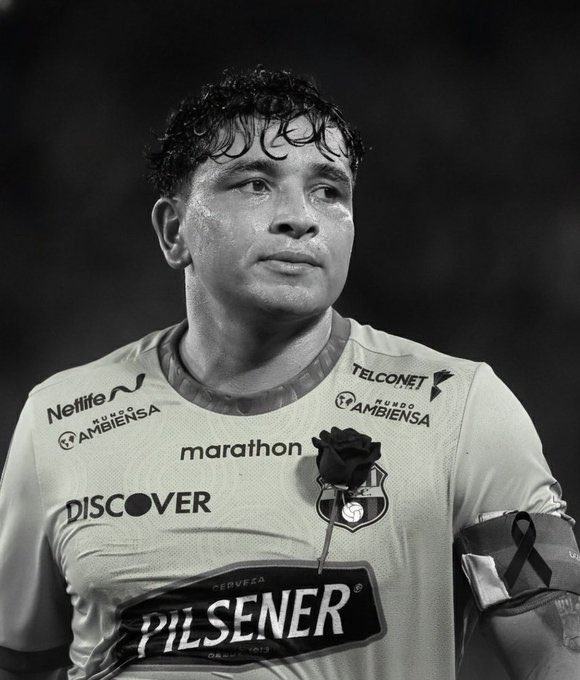
The world of football is in deep mourning following the shocking and tragic death of Mario Pineida, a 33-year-old Ecuadorian international footballer who was shot and killed in a violent attack in Guayaquil. Pineida, a respected defender who played for Barcelona SC, lost his life in an incident that also claimed the life of his wife and left his mother injured.
The brutal shooting has sent shockwaves through Ecuador and the global football community, raising renewed alarm over rising insecurity and violent crime in the South American nation. Tributes have poured in from clubs, teammates, fans, and football officials, all struggling to come to terms with the sudden loss of a player widely regarded as disciplined, humble, and dedicated both on and off the pitch.
Deadly Shooting in Guayaquil
According to preliminary police reports, the fatal attack occurred in the Samanes area of northern Guayaquil, one of Ecuador’s largest and most crime-affected cities. Pineida was reportedly in the company of his wife and mother when armed assailants opened fire. Witnesses said the attackers arrived on a motorcycle and fled the scene immediately after the shooting.
Emergency responders pronounced Pineida and his wife dead at the scene, while his mother was rushed to hospital with gunshot injuries. Medical officials later confirmed that her condition was stable, though she remained under close observation.
Authorities have described the incident as an apparent targeted attack, though investigations are still ongoing. No arrests had been made at the time of reporting, and police are reviewing surveillance footage and forensic evidence to establish the motive and identify those responsible.
A Career Cut Short
Mario Pineida was one of Ecuador’s most recognizable defenders, known for his versatility, work rate, and consistency. Born in Santo Domingo, Ecuador, he rose through the ranks of local football before establishing himself as a top-flight professional.
He began his career at Independiente del Valle, where his performances quickly caught national attention. His solid defending and ability to contribute offensively earned him a move to Barcelona SC, one of Ecuador’s most successful and widely supported clubs.
At Barcelona SC, Pineida became a key squad member, featuring in domestic league matches and continental competitions. Over several seasons, he helped the club challenge for titles and remained a fan favorite due to his commitment and professionalism.
In addition to his club career, Pineida also represented Ecuador at the international level, earning nine caps for the national team. He featured in major regional tournaments, including the Copa América, proudly wearing the national colors and representing his country on some of South America’s biggest football stages.
Stints Abroad and Continued Success
Pineida’s career also included a stint outside Ecuador. He spent time in Brazil on loan at Fluminense FC, where he gained valuable international experience and competed in one of South America’s most demanding leagues.
After returning to Ecuador, he continued playing at a high level, including a loan spell at El Nacional, before making his way back to Barcelona SC. His return was seen as a boost for the club’s defensive options, and he remained an influential figure in the squad.
Teammates often described Pineida as a leader in the dressing room—quiet but firm, focused, and deeply committed to the game.
Football Community in Mourning
Following confirmation of his death, Barcelona SC released a statement expressing deep sorrow and extending condolences to Pineida’s family. The club described him as a player who embodied professionalism and passion, noting that his loss would be felt far beyond the football pitch.
The Ecuadorian Football Federation also issued a statement condemning the violence and honoring Pineida’s contribution to Ecuadorian football. Fellow players, former teammates, and rival clubs joined fans in sharing tributes, many describing the tragedy as senseless and heartbreaking.
Across social media, supporters shared photos, videos, and messages remembering Pineida’s goals, tackles, and moments of national pride. Moments of silence are expected to be observed in upcoming league matches in Ecuador.
Rising Violence in Ecuador
Pineida’s killing has once again placed a spotlight on Ecuador’s growing security crisis. In recent years, the country has experienced a sharp rise in violent crime, particularly in coastal cities such as Guayaquil.
Authorities have linked the surge in homicides to organized crime, drug trafficking networks, and gang-related violence. Public figures, athletes, and ordinary citizens alike have increasingly found themselves at risk.
The football fraternity has expressed concern that players are becoming targets, either because of their public profile or as collateral victims of broader insecurity. Pineida’s death follows several other violent incidents involving footballers in Ecuador in recent years, fueling calls for stronger protection and urgent security reforms.
Impact Beyond Football
Beyond his achievements on the pitch, Pineida was known as a devoted family man. Friends and colleagues say he kept a low profile and focused on providing for his loved ones and building a future beyond football.
The fact that his wife was also killed in the attack has deepened the tragedy, leaving many questioning how such violence can devastate entire families in a single moment. His mother’s injury has further underscored the emotional toll of the incident, with fans and well-wishers praying for her recovery.
For many Ecuadorians, the loss of Pineida represents more than the death of a footballer—it symbolizes the growing fear that no one, regardless of status or profession, is safe from violence.
Calls for Justice and Accountability
Human rights groups, sports leaders, and fans have called on authorities to ensure a thorough and transparent investigation into the attack. There are growing demands for justice not only for Pineida and his family but for countless other victims of violent crime across the country.
Security analysts argue that solving high-profile cases like this one is crucial for restoring public confidence in law enforcement and the justice system. Failure to do so, they warn, could further embolden criminal networks.
Meanwhile, the Ecuadorian government has reiterated its commitment to combating organized crime, pledging to strengthen security operations and improve intelligence-led policing.
Remembering Mario Pineida
As tributes continue to pour in, Mario Pineida is being remembered for his dedication, humility, and love for the game. From his early days in domestic football to representing Ecuador on the international stage, his career was marked by perseverance and quiet excellence.
Fans will remember him not just for the matches he played, but for the pride he brought to Ecuadorian football. His legacy now lives on in the memories of teammates, supporters, and a nation united in grief.
The tragic loss of Mario Pineida serves as a stark reminder of the human cost of violence—and the urgent need for peace, justice, and security in Ecuador.