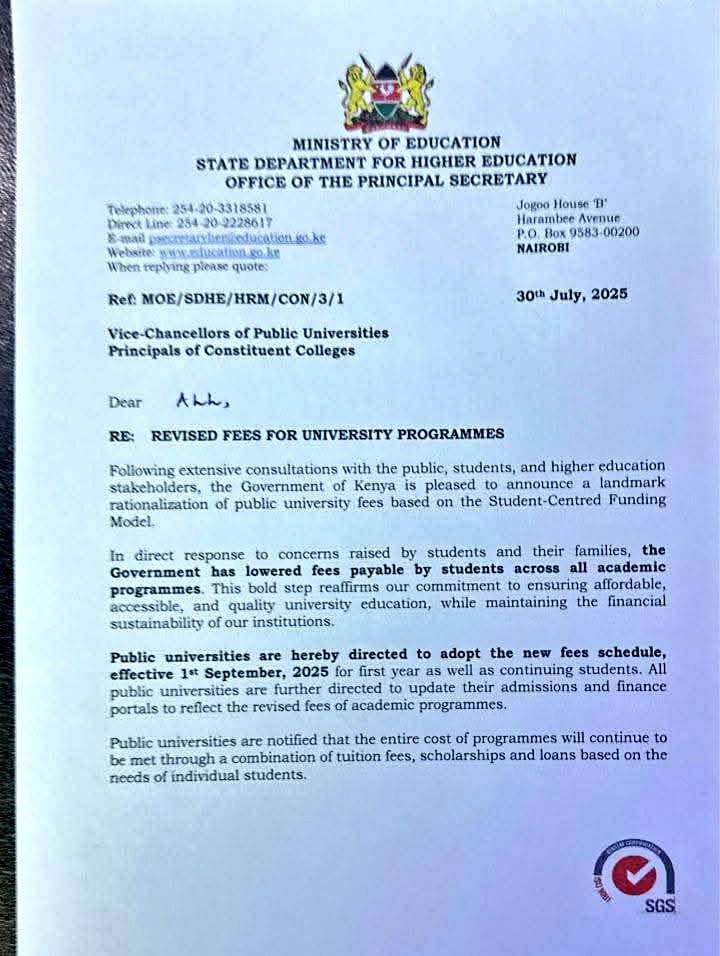
Nairobi, July 30, 2025 – In a historic move, the Kenyan government has announced a massive reduction in public university fees, offering relief to thousands of students and parents struggling with the high cost of higher education. The new Student-Centred Funding Model introduces revised fee structures, cutting costs by up to 50% across all academic programmes, effective September 1, 2025.
This decision follows nationwide consultations with students, parents, and education stakeholders, reaffirming the government’s commitment to affordable, accessible, and quality university education. Below, we break down everything you need to know—from the new fee schedules to how this impacts continuing and incoming students.
Why the Fee Reduction?
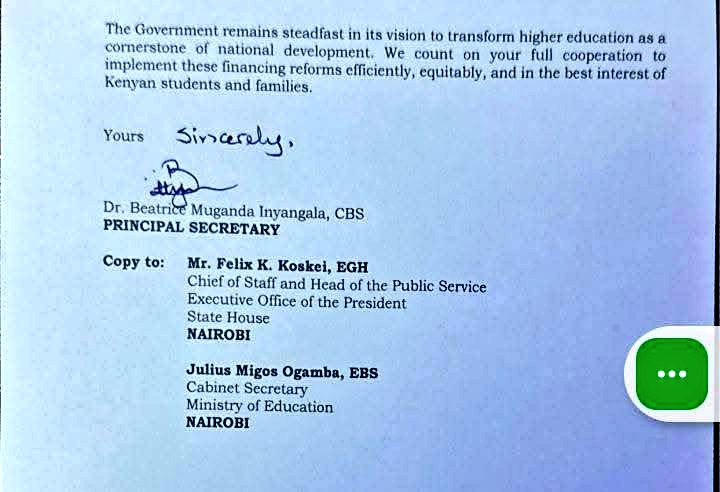
The Ministry of Education, under Principal Secretary Dr. Beatrice Muganda Inyangala, has rolled out a rationalized fee structure to ease financial burdens on families while ensuring universities remain financially sustainable. Key reasons behind this move include:
- Public outcry over unaffordable tuition fees.
- Growing student debt under the previous HELB loan structure.
- Government’s pledge to make education more inclusive.
“This bold step reaffirms our commitment to ensuring affordable, accessible, and quality university education while maintaining the financial sustainability of our institutions.”
— Dr. Beatrice Muganda Inyangala, Principal Secretary
New Fee Structure: Breakdown by Programme
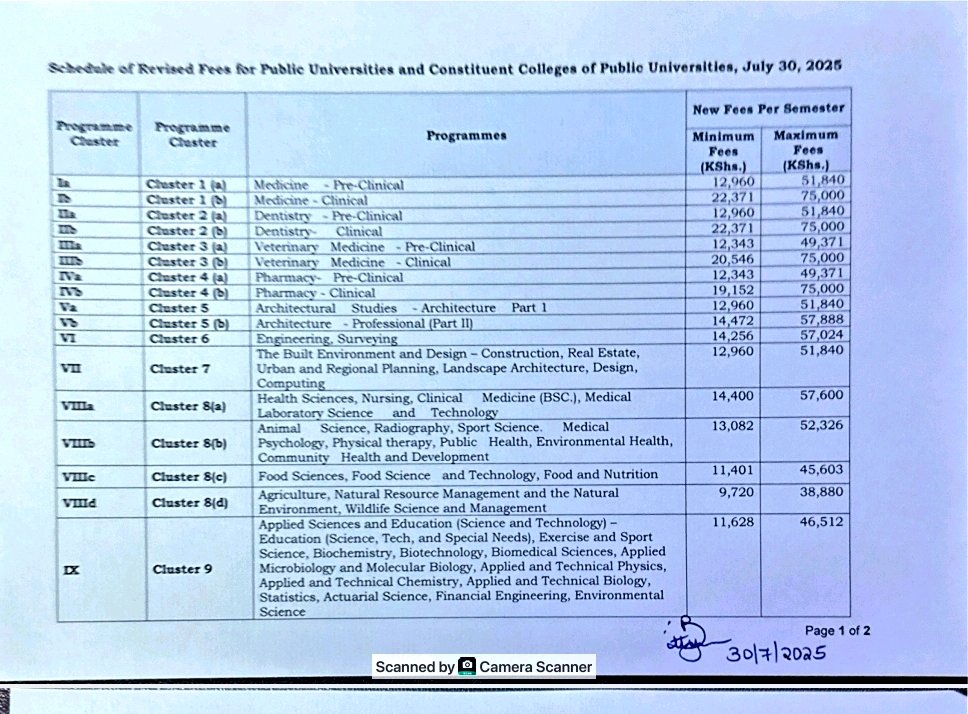
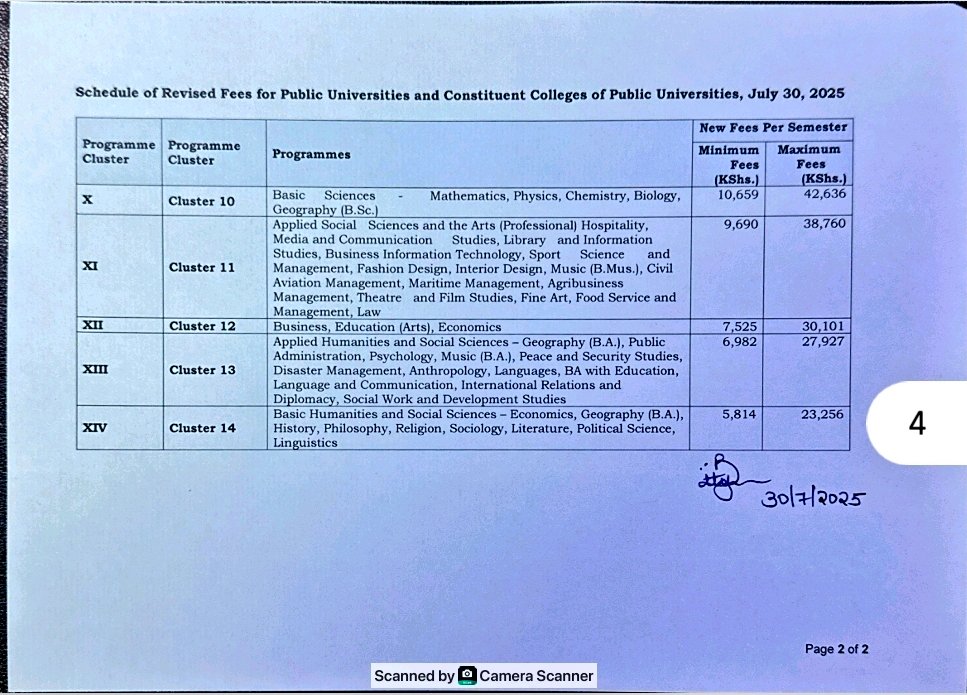
The revised fees are categorized into 14 clusters, with each programme assigned a minimum and maximum fee range per semester. Below is the full breakdown:
Medical & Health Sciences
| Cluster | Programme | Min Fee (KSh) | Max Fee (KSh) |
|---|---|---|---|
| Cluster 1 | Medicine (Pre-Clinical) | 12,960 | 51,840 |
| Cluster 2 | Medicine (Clinical) | 22,371 | 75,000 |
| Cluster 3 | Dentistry (Pre-Clinical) | 12,960 | 51,840 |
| Cluster 4 | Dentistry (Clinical) | 22,371 | 75,000 |
| Cluster 8 | Health Sciences, Nursing | 13,082 | 52,326 |
| Cluster 13 | Public Health, Community Health | 11,401 | 45,603 |
Engineering & Architecture
| Cluster | Programme | Min Fee (KSh) | Max Fee (KSh) |
|---|---|---|---|
| Cluster 6 | Engineering, Surveying | 12,960 | 51,840 |
| Cluster 7 | Built Environment & Design | 14,400 | 57,600 |
| Cluster 9 | Architecture (Professional) | 14,256 | 57,024 |
Business & Social Sciences
| Cluster | Programme | Min Fee (KSh) | Max Fee (KSh) |
|---|---|---|---|
| Cluster 12 | Business, Economics | 7,525 | 30,101 |
| Cluster 13 | Public Administration, Psychology | 6,982 | 27,927 |
| Cluster 14 | History, Sociology, Political Sci. | 5,814 | 23,256 |
(See full tables in the attached documents for more programmes.)
Key Takeaways from the New Fee Policy
- Effective Date: September 1, 2025 (applies to both new and continuing students).
- Payment Flexibility: Fees can be covered through tuition fees, scholarships, and HELB loans.
- No Hidden Charges: Universities must update their portals to reflect the new rates.
- Equitable Access: The needs-based model ensures financially struggling students get more support.
How This Affects You
For Parents & Students
- Massive savings—some programmes now cost half of previous rates.
- Reduced reliance on loans—lower fees mean smaller HELB debts.
- No last-minute financial rush—budgeting just got easier.
For Universities
- Mandatory compliance—all public universities must adopt the new fees.
- Portal updates required—admissions and finance systems must reflect changes.
What’s Next?
- Universities have until August 31, 2025, to adjust their systems.
- Students should confirm their revised fee statements via official university channels.
- HELB will align loan disbursements with the new structure.
Final Word
This fee reduction is a game-changer for Kenyan higher education, easing financial strain on families while ensuring institutions remain viable. If you know a parent fundraising for university fees, share this news.